“The Law” Is Just A Bunch Of Words On A Page

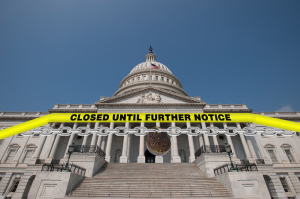
Shut Down Government

Most people don’t directly interact with the letter (as opposed to the spirit) of government laws. Sure, people will come face to face with the law – as in, deal with law enforcement officers. But very few people actually read the text of the laws that they are required to abide by.

This is completely understandable, and even more so after reading through the bureaucratic legalese that I need to understand for my job. I truly have a new appreciation for the absurdity of forcing people to comply with all the of the diktats of the US government. I strongly suggest, as a simple exercise, to go pick a random section in the Federal Register and read just 20-30 pages. You will immediately see that it would be nearly impossible for these laws to be enforced in any non-arbitrary manner.

It’s all the more ridiculous when you realize that there are over 80,000 pages in the Federal Register, as of 2013. Luckily, I only need to read about 400 pages of it, or a mere half a percent. But there are so many little rules and regulations in those 400 pages that it would be nearly impossible to actually comply with them, or even for the bureaucrats to adequately ensure that their rules are being followed.

There are a lot of things I could say about regulations, including their crippling effects on the economy, how they lead to monopoly privilege and hurt the poor, how they don’t make us any safer, and so on. These are all important topics, and I intend to cover them in the future.

But for right now, I just want to point out the odd realization I had as I was reading through this document from hell: what we call “the law” is just a set of commands made by one arbitrary group directed at another. People tend to have a superhuman view of the law, and give it an almost mythological significance.

But there is nothing special about the law (legislation, more accurately). The only difference between what is in the Federal Register and my writing on this blog is that there are a set of people who, for some odd reason, are willing to commit acts of violence on behalf of the former and not for the latter (but just in case I’m wrong: “Everyone must pay the owner of Government Denies Knowledge 30% of their salary.”).

The government isn’t a mythical beast. It’s just a group of people. How come one group of people gets to make demands on the rest of the population? What gave them that right? And please don’t tell me that “we ARE the government” or any of that clap trap. This is just me ranting, so I won’t go into detail about why the “social contract” is bogus, we aren’t obligated to obey the government out of gratitude, or why perhaps a liberal democracy isn’t what people would choose from the “original position”. Those are subjects for yet another time. For right now, it suffices to say that there is no possible moral justification for some people to rule over others besides might makes right.

But this group does have the “might” part, at least. And with that might, they’ve created all these laws. Laws that the rest of us are obliged to follow. But these laws aren’t like physical laws, which are immutable and don’t require any type of enforcement. You can’t just “disobey” gravity. In contrast, there is a human element to the creation, enforcement, and obeying of government decree.

And many of us, even the most radical libertarians, will often forget that the government’s decrees are just a bunch of words on a page, arbitrarily put together by some other group of people. And people make mistakes, and these mistakes make it into the law. For instance:

With respect to when the quality measures data must be publicly reported, we propose that the QCDR must have the quality measures data by April 31 of the year following the applicable reporting period (that is, April 31, 2016, for reporting periods occurring in 2015). The proposed deadline of April 31 will provide QCDRs with one month to post quality measures data and information following the March 31 deadline for the QCDRs to transmit quality measures data for purposes of the PQRS payment adjustments. We also propose that this data be available on a continuous basis and be continuously updated as the measures undergo changes in measure title and description, as well as when new performance results are calculated.

Even if you had a complete understanding of everything in that paragraph, I suspect you’d have to struggle very hard to make a deadline of “April 31”. In all fairness, this was merely the proposed rule, and someone caught the error for them before making it into the official final rule. But even in the final rule, I’ve caught multiple typos. And this is the law.

We’re all just humans. Every day, each of us engages in dozens or hundreds of consensual, nonviolent actions with those around us. I was in an office for most of the day, and not once did my office mate or myself murder each other, steal from each other, etc. Not once! And you know what? We didn’t do that because the law told us not to. We did it because most people just aren’t assholes.

Yes, there are bad apples, but there are ways of dealing with them that don’t require a state apparatus. Anything a government has ever done has been done through the efforts of private individuals, and has been done better. Civilization existed long before the state. How can it be called the “rule of law” when one group arbitrarily wields power over another, and “chaos and disorder” when the world is based on a framework of purely voluntary interaction?

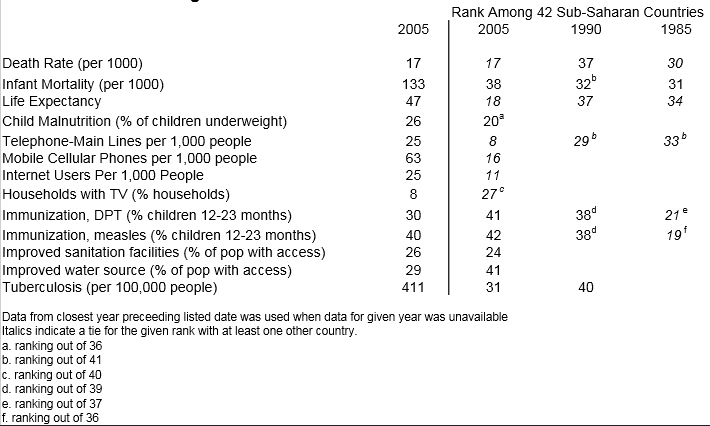
photo by:

The “Anarchist” Experience In Somalia – What Libertarians Need To Know

One of the most fascinating places on Earth right now, particularly to libertarians, is Somalia. For much of the past 23 years, Somalia has been living under relative statelessness, and thus functions as an interesting case study for some anarchist concepts.

What has been widely conceived of as a failure in Somalia is actually far more complex than the mainstream view would suggest. However, the dominance of this view, that Somalia is a chaotic den of warlords and pirates, and where civilians live under constant fear of being killed, remains somewhat unchallenged in the public’s mind.

Because of this view, a common retort to libertarians/anarchists during any political discussion is: “Why don’t you go move to Somalia, then?” The absurdity of this comment will be briefly addressed towards the end of this post, but basically amounts to the silliness of “America: Love it or leave it” arguments.

And the libertarian response is usually one of two things. Usually, I’ve heard “Somalia is not anarchist/libertarian”, but sometimes I’ll hear “Somalia has improved drastically over the past twenty years”. On the surface, it appears that these ideas would be mutually exclusive (from the libertarian standpoint) and that we can’t have it both ways.

In this post, however, I intend to argue that Somalia at times has been largely (but not completely) anarchist, that the anarchist aspects are responsible for the vast improvements in Somalia that have been documented since 1991, and that it is the non-anarchist aspects that have led to the modern violence that sticks out in peoples’ minds.


Brief History of Somalia

Somalia has a long and storied history. My intention here is to provide a brief overview of this history in order to help understand what has been happening in modern day Somalia since the government collapsed in 1991. Note that my description is far from complete, but I believe captures all the necessary details.

In the early days of Islam, many Muslims fled persecution to the Horn of Africa. Islam quickly became a dominant religion in the Somali peninsula during the 7th and 8th centuries. At first, Christians and Muslims in the area got along, but soon things devolved. Several centuries of warfare between various Christian and Muslim kingdoms in what is currently Ethiopia and Somalia ensued.

In the 16th century, foreign powers began to intervene. The Ottoman Empire allied with the Somali Muslims against the Portuguese and Ethiopian Christians. The history of foreign intervention in Somalia and the Horn of Africa began a long time ago.

It was in the late 19th century, however, when the foreign influences began to accelerate. During the Scramble for Africa, the British took control over northern Somalia, and Italy took over the south. Through the early 1900s, Somalis resisted both the British and Italian governments, and areas within Somalia were in a state of rebellion for decades.

In 1941, the British took control over nearly all of Somalia, forcing the Italians out (except for the small trusteeship of Italian Somaliland). In 1960, Somalia won its independence. The new government didn’t last long – in 1969, a (nearly) bloodless military coup put Mohamed Siad Barre in power. He immediately dissolved the parliament as well as the Supreme Court, and suspended the constitution.

In 1976, Barre began to implement “scientific socialism” – communism. Unsurprisingly, this proved to be a disaster for the Somali economy. At the same time, Somalia went to war with Ethiopia to take the Ogaden region and incorporate it into “Greater Somalia”. The Soviet Union intervened in order to save the Ethiopian communist regime, so Barre shifted his alliance towards the United States.

In the 1980’s, many Somalis became disenchanted with the totalitarian Barre regime. Resistance movements, encouraged by Ethiopia, began to spring up around the country. In the late 80’s, this led to a revolution and a Somali civil war, culminating in Barre’s ouster in 1991.

A coalition of UN peacekeepers, led by the United States, landed in Somalia in 1993 for a two year operation. Many clan leaders saw the UN and US as a threat, and fought back. After some embarrassing defeats, the peacekeepers left Somalia in 1995. From then until 2006, Somalia was in a state of “anarchy”, and is the period we will be delving into in this post. During this time, a system of customary law called Xeer, which developed in the Horn of Africa around the 7th century, was practiced. I will discuss Xeer in more detail in the next section.

During this period of “anarchy”, outside forces tried to impose a government on the people of Somalia more than a dozen times. These transitional governments repeatedly failed to garner public support or be recognized by local Somalis. As attempts to establish a government in Somalia intensified, the Islamic Courts Union (ICU) assumed control over much of the southern part of the country in 2006. The Transitional Federal Government, with the help of the Ethiopian army, African Union peacekeepers, and US air support, fought back against the ICU and took over most of the country.

Since then, an Islamic insurgency has been waged against the government and Ethiopian troops. The fighting has gone on back and forth, and has continued to this day. While the government is still very weak, it is vastly stronger now than it had been before 2006. More permanent political institutions are beginning to entrench themselves.

Predictably, the new Somali government is quite corrupt, with 70-80% of the weapons that are sent as part of foreign aid are getting diverted and sold elsewhere. Additionally, the new government (as well as the Islamic militants they are fighting with) are continually engaging in human rights abuses.

It will be interesting to see how events in Somalia play out over the coming years, but it is worth noting that it would be wholly inappropriate to consider modern Somalia to be anarchist in any form. Perhaps if the new federal government fails to establish complete control of the territory, an approximate “anarchy” will be reestablished. More likely, however, is that we will see a continued civil war, with the Somali government slowly taking over.


Deeper Dive Into the Xeer Legal System

Incredibly, states have not usurped the traditional role of clans in Somali society, despite this happening in most parts of the world as states grew more centralized. The Xeer legal system which I mentioned briefly in the last section has remained an incredibly strong force in Somali society since it was established well over a thousand years ago.

In this section, I will go into some detail outlining major facets of the Xeer legal system. Keep in mind that this description does not constitute advocacy for all parts of it. Much of it is good, but certainly not all of it is ideal. That being said, there is much that we can learn from it.

Much of what we know about the operation of this system comes from the scholarship of Michael van Notten, who married into a Somali clan and got to witness and study the Xeer system firsthand. His book, The Law of the Somalis, is the ultimate source of most of the information in this section.

This clan-based legal system is based primarily on property rights, and is compensatory rather than punitive. That means no jails, and the victims of crime are made whole again through some form of compensation from the perpetrator whenever possible.

“The Xeer outlaws homicide, assault, torture, battery, rape, accidental wounding, kidnapping, abduction, robbery, burglary, theft, arson, extortion, fraud, and property damage (Van Notten 2005:49). The legal system focuses on the restitution of victims, not the punishment of criminals. For violations of the law, maximum payments to compensate victims are specified in camels (payment can be made in equivalent monetary value). Typical compensation to the family of a murder victim is 100 camels for a man and 50 for a woman; an animal thief usually must return two animals for every one he stole.”

Contrast those aims with those of the current reigning paradigm in theories of justice. In most of the world today, if you commit a crime, you get punished. This means going to jail, or paying monetary fines to the state. The victim of these crimes, of course, gets nothing (although they do get to pay for the criminal’s incarceration through their taxes…yay). And, in most of the world today, victimless “crimes” such as drug use, prostitution, and so on, are routinely prosecuted. Since the Xeer is based on property rights, any activity considered criminal must have a victim who has been violated in some way.

When presented with the guiding philosophy of a polycentric legal system like the Xeer, many people appreciate the sentiment but question how it can work in practice. Most people simply cannot visualize how a non-monopoly justice system could possibly function. They assume that it would collapse as nobody respected the dictates of a given judge. More fundamentally, most people can’t comprehend a legal system that isn’t based on legislation; without a specifically designated body to craft laws, where would laws even come from?

The answer to this question will differ depending on the polycentric legal order in question (common law, the law merchant, ancient Icelandic law, etc.). In the case of Somalia, the law is based on customs and precedents, as interpreted by the clan elders.

“As Ahmed Dualeh of Hargeysa University explains, a Xeer (law) is a law arrived at by agreement, usually originating from an event, such as a killing of another clan’s member. If, instead of retribution, the injured clan agrees to accept monetary compensation instead, then this sets a precedent which, if reinforced by a large number of verdicts in similar cases, matures into a principle and eventually a law, or Xeer. In the words of Hanad Sahardeed, a Diaspora-Somali from Canada, these Xeer are passed down from generation to generation, simply by oral communication.” -Gladitz

“To become a judge in Somalia, one first has to become the head of an extended family. Family heads are usually chosen for their wisdom and knowledge of law. Yet no formal legal training is required of a judge and a judge is free to develop his own doctrines and legal principles. If a judge’s verdicts do not resonate with the feelings of fairness within the community, that judge will simply not be asked to preside again.” – Gladitz

The typical response, at this point, is that the clans are de facto governments. But it only seems that way because people are so conditioned to believe that only governments can provide justice. If the clans are providing justice, then they must be governments.

However, this is not true. Governments will monopolize the provision of justice in a given area, and force people to use their services. Clans do not. There is no monopoly on police or judicial functions within Somalia or Somali clans. Anyone can serve in these capacities except for prominent figures like religious leaders and heads of clans. As an aside, these sorts of prominent figures are held to a higher standard than the rest of society, and are required to pay double what other clan members are required if found guilty.

“Although the interpretation of the law stems from clan elders, the clans are not de facto governments. Upon becoming an adult, individuals are free to choose new insurance groups and elders. In addition, individual clans are not geographic monopolies. As Little (2003: 48) notes, ‘In no way does the geographic distribution of clans and sub-clans correlate with neatly defined territorial boundaries…drought and migration blur the relationship between clan and space.’”

“Throughout all of Somalia upon becoming an adult, individuals are free to choose new insurance groups and elders. They are allowed to either form a new insurance group with themselves as head or they may join an already established group provided it will accept the person. Movement between clans is particularly widespread in southern Somalia. Some clans have more members who were adopted than who were born into it.” –Powell

“The individual clans and insurance groups are not geographic monopolies. Geographic distribution of clans does not match territorial boundaries. As pastoral Somali move throughout their country their legal system moves with them. So in any given area multiple clan governance systems can exist.” – Powell

In the preceding quotes, we saw reference to insurance groups a couple of times. This social insurance plays a critical role in the Xeer system. Everyone must be fully insured against any legal liabilities. If someone can’t pay, their kin becomes responsible. If someone has been habitually causing trouble, the family can disown the criminal, who then becomes an outlaw.

“A person who violates someone’s rights and is unable to pay the compensation himself notifies his family, who then pays on his behalf. From an emotional point of view, this notification is a painful procedure, since no family member will miss the opportunity to tell the wrongdoer how vicious or stupid he was. Also, they will ask assurances that he will be more careful in the future. Indeed, all those who must pay for the wrongdoings of a family member will thereafter keep an eye on him and try to intervene before he incurs another liability. They will no longer, for example, allow him to keep or bear a weapon. While on other continents the re-education of criminals is typically a task of the government, in Somalia it is the responsibility of the family.” – van Notten

So that’s all well and good, but what happens when disputes arise between members of two different clans? In this case, the elders of the two clans must come to an agreement. If they can’t, they appoint an elder from a different clan to settle the dispute. This process is very similar to modern arbitration, which is incredibly common in America.

Xeer tree

Traditionally, judges arbitrate a dispute under an acacia tree until both parties are satisfied.

There is, of course, much more to the Xeer system than what I’ve presented above. Many people who read this will think: “But what about ___?” and be unsatisfied with what I’ve provided here. There are many complexities to any legal system, the Xeer being no exception. There’s no shortage of material online regarding the workings of polycentric legal systems in general, and I would consult van Notten’s book for more details on the Xeer itself.

Considering how the Xeer has survived since the 7th century, has operated under colonial rule, and made it through many years of Barre’s government trying to destroy it, it’s safe to say that it is a robust system. Even in Somaliland, a northern region that broke off and formed its own “government”, the Xeer is still practiced to this day.

“In today’s Somaliland the parties and their respective elders will seek leave from an official court to agree and be bound by the traditional procedure and verdict, which is later submitted to the court. The court’s officer then formally signs the verdict and adopts the decision.” – Gladitz

The Xeer is a truly amazing system, and it is at least in part responsible for the benefits that Somalia has seen from its period of “anarchy”. Benefits – say what?

Note: The sources in this section were Powell and Gladitz.


How Has Somalia Changed Since 1991?

After the collapse of Siad Barre’s government in 1991, Somalia fell into what popular opinion and the international community has dubbed “anarchy”. The reality, of course, is far more complex.

Somalia is one of, if not the most, anarchic regions in the world. Personally, I would argue that there are certain regions in South America, where the weak central government doesn’t hold much sway, that are more anarchic. There are similar regions in Southeast Asia and several other parts of the world. That being said, Somalia is considered the most prominent example.

Massive amounts of foreign intervention, as well as the ever looming “threat” of a government forming are primary reasons why Somalia cannot be considered truly anarchic. There have been more than a dozen “transitional” governments that have attempted to take control since 1991, but until recently, all had failed spectacularly. All the same, various clans would compete to take the reins of any potential new government. This was the main cause of the warfare and violence that plagued Somalia after the government’s collapse through the mid-90’s.

But at a certain point, it became clear that, at least for the time being, there would be no central government. And as the 90’s progressed, Somalia became fairly peaceful. This lasted until 2006, when attempts to impose further government led to chaos and warfare.

But what happened to the people of Somalia during this time? Did the lack of government cause everyone to become bloodthirsty homicidal maniacs? Could an economy survive at all without the guidance of a central planner?

The Mainstream View

Actually, conditions in Somalia improved considerably since the fall of the government, both in an absolute sense and relative to other African countries. No, this is not me living in some crazed libertarian fantasy world – Somalia is generally recognized to be in much better shape now than public perception would suggest. Consider this very reserved assessment from the CIA World Fact Book:

“Telecommunication firms provide wireless services in most major cities and offer the lowest international call rates on the continent. Mogadishu’s main market offers a variety of goods from food to electronic gadgets. Hotels continue to operate and are supported with private-security militias. Somalia’s government lacks the ability to collect domestic revenue, and arrears to the IMF have continued to grow. Somalia’s capital city – Mogadishu – has witnessed the development of the city’s first gas stations, supermarkets, and flights between Europe (Istanbul-Mogadishu) since the collapse of central authority in 1991. This economic growth has yet to expand outside of Mogadishu, and within the city, security concerns dominate business. In the absence of a formal banking sector, money transfer/remittance services have sprouted throughout the country, handling up to $1.6 billion in remittances annually, although international concerns over the money transfers into Somalia currently threatens these services.”

The “surprising” success (surprising to non-anarchists) of Somalia has been noted in other mainstream publications. The World Bank claims that Somalia is doing better than they would have expected, and better than other African nations (note that the link to the actual World Bank report has been removed):

“Somalia has lacked a recognized government since 1991—an unusually long time. In extremely difficult conditions the private sector has demonstrated its much-vaunted capability to make do. To cope with the absence of the rule of law, private enterprises have been using foreign jurisdictions or institutions to help with some tasks, operating within networks of trust to strengthen property rights, and simplifying transactions until they require neither. Somalia’s private sector experience suggests that it may be easier than is commonly thought for basic systems of finance and some infrastructure services to function where government is extremely weak or absent.”

Again, phrased very conservatively. An organization such as the World Bank would never admit that anarchic institutions are highly beneficial, but we’ll get into that more below.

In 2011, the BBC had a special report about Somalia, twenty years after “anarchy” was established. In these articles, they acknowledge that Somalia has done “remarkably” well, but talk out the other side of their mouth and repeatedly claim that things would be better with government.

“Since 26 January 1991…the economy has not only been resilient, some sectors have shown remarkable growth.

But investment is very risky and long-term strategic planning is impossible given the political situation.”

“Remarkably for a country which has suffered two decades of conflict, living standards have slowly improved.

Somalia remains poor in relation to most African countries, but its economy and its people have found ways to get by without a government.

Somalia’s GDP has risen steadily throughout the last two decades, as has its life expectancy. And while neighbouring countries have been hit hard by the HIV/Aids epidemic, Somalia has largely escaped.

Although health facilities remain poor in most regions, the chances of a newborn child surviving to its first birthday have actually increased slightly since 1991.”

These mainstream acknowledgments point out that Somalia hasn’t completely collapsed, although the security situation isn’t exactly rosy, either. This is a fair assessment, but not a complete picture. I’ll go into more detail on the security issue towards the end of this section.

What Does The Data Say?

In the meantime, here is a table (note the source) depicting some important development indicators and how Somalia has fared since the government collapsed.

Somalia – how has life changed?
Index 1991 2011 (or latest)
Life expectancy 46 years 50 years
Birth rate 46 44
Death rate 19 16
GDP per capita $210 $600
Infant mortality 116 deaths <1yr, per thousand births 109 deaths <1yr, per thousand births
Access to safe water 35% 29%
Adult literacy 24% 38%

Sources: CIA/UN/UNICEF

You’ll notice that on nearly every measure (the exception being access to safe water), there has been a substantial improvement during the twenty years of “chaos” and the horrors of “anarchy”. It is of course possible that some or all of this benefit has been due in part to the international aid agencies that have been active in Somalia during this time. While possible, this seems unlikely, considering how Somalia’s best years were those with the least international intervention.

One could claim that these improvements simply reflect expected improvements over time, given a twenty year period. However, according to the Independent Institute:

“During the last five years of government rule, life expectancy fell by two years but since state collapse, it actually has increased by five years. Only three African countries, Guinea, Gambia, and Rwanda, can claim a bigger improvement.”

In fact, Somalia has done quite well relative to other African countries. You can see from this table that Somalia has generally improved since statelessness in both absolute and relative terms, compared to other Sub-Saharan African countries.

Somalia Indicators Table

Source: Powell. Click to enlarge

To summarize:

“Although all data from Somalia must be treated with some caution, when looking at these 13 measures of living standards, the overall picture seems clear. Somalia may be very poor, but the loss of its government does not appear to have harmed standards of living. On many measures Somalia compares favorably with the other 42 Sub-Saharan countries. Since losing its central government, we find that Somalia improved measures of well being both in absolute terms and relative to other African states.” – Powell

One specific area that stands out is the telecom industry. Telecoms are thriving in “lawless” Somalia, and are even considered the best in Africa, according to the BBC. How can this be?

“In many African countries state monopolies and licensing restrictions raise prices and slow the spread of telecommunications. In Somalia it takes just three days for a land-line to be installed; in neighboring Kenya waiting lists are many years long (Winter 2004). Once lines are installed, prices are relatively low. With a $10 monthly fee, local calls are free, and international calls are only 50 cents per minute on land-lines; web access costs only 50 cents an hour (Winter 2004). According to the Economist, using a mobile phone in Somalia is “generally cheaper and clearer than a call from anywhere else in Africa” (2005: 89).” – Powell

Did you catch that? The lack of government interference in the market has allowed this sector to thrive. Without the stifling effects of regulations or the forceful imposition of a monopoly, service has improved and prices have dropped.

Other areas have seen considerable improvement as well, even relative to other African countries. For instance, Somali exports have vastly increased since the government collapsed. In fact, the herding economy in Somalia is stronger than even its (state-possessing) neighbors, Ethiopia and Kenya.

Somalia’s experience defies conventional wisdom in regards to several economic indicators, and not just specific industries. Consider the Gini coefficient, a measure of economic inequality. According to Nenova and Harford (2004), Somalia has outperformed its neighbors. Stateless Somalia is a more equal society than statist Kenya, Ethiopia, or Djibouti. Are you listening, liberal readers?

Not only that, but the Somali schilling has stabilized in world currency markets. In other words, we don’t need a government to create and regulate the issuance of money.

“…prior to the large monetary injections in Somalia in March of 1999 and then in 2000, the SoSh showed greater stability than the national currencies of both Ethiopia and Kenya. From 1996 to February 1999 the SoSh depreciated against the US$ only 12.14 percent. Between 1996 and 1999 the Kenyan shilling lost 32.55 percent against the US$ and the Ethiopian birr depreciated against the dollar 26.58 percent.” – Leeson

Having a central bank control your currency leads to inflation? It couldn’t possibly!

Summarizing some of the main statistics from Leeson’s work, Spencer Heath MacCallum has this to say (and that link has some good info on the Xeer as well):

“Comparing the last five years under the central government (1985–1990) with the most recent five years of anarchy (2000–2005), Leeson finds these welfare changes:

  • Life expectancy increased from 46 to 48.5 years. This is a poor expectancy as compared with developed countries. But in any measurement of welfare, what is important to observe is not where a population stands at a given time, but what is the trend. Is the trend positive, or is it the reverse?
  • Number of one-year-olds fully immunized against measles rose from 30 to 40 percent.
  • Number of physicians per 100,000 population rose from 3.4 to 4.
  • Number of infants with low birth weight fell from 16 per thousand to 0.3 — almost none.
  • Infant mortality per 1,000 births fell from 152 to 114.9.
  • Maternal mortality per 100,000 births fell from 1,600 to 1,100.
  • Percent of population with access to sanitation rose from 18 to 26.
  • Percent of population with access to at least one health facility rose from 28 to 54.8.
  • Percent of population in extreme poverty (i.e., less than $1 per day) fell from 60 to 43.2.
  • Radios per thousand population rose from 4 to 98.5.
  • Telephones per thousand population rose from 1.9 to 14.9.
  • TVs per 1,000 population rose from 1.2 to 3.7.
  • Fatalities due to measles fell from 8,000 to 5,600.”

There were only two metrics that Leeson found worsened: adult literacy and school enrollment. But this can be explained given that foreign aid made up nearly 60% of pre-anarchic GNP and was the main source of funds for Somali schools under the Barre regime.

But What About The Security Situation?

When most people think of Somalia, they think of violence. And mainstream coverage of Somalia harps on the fact that Somali businesses must pay private security firms to protect their goods. While that is certainly true, that ignores the fact that national police don’t work for free, either. No matter what, security must be paid for somehow.

The real question is: How does the security situation in Somalia shape up compared to its neighbors and across time? It turns out that violence is nowhere near as bad as people assume a stateless society would be. In fact, according to Leeson, violence went down in the late 90s:

“Most depictions of Somalia leading up to the 2006 period grossly exaggerate the extent of Somali violence. In reality, fewer people died from armed conflict in some parts of Somalia than did in neighboring countries that have governments. In these areas security was better than it was under government (UNDP, 2001). About the same number of annual deaths in Somalia during this period were due to childbirth as were attributable to war—roughly four percent of the total (World Bank/UNDP, 2003, p. 16). And these deaths were combatants, not civilians. “Atrocities against civilians … [were] almost of unheard of” (Menkhaus, 2004, p. 30). This is still too high, but far from cataclysmic. In fact, it’s not far from the percentage of deaths due to homicide in middle-income countries such as Mexico, which in 2001 was 3.6 (WHO, 2006).”

Crime likely went down as well, as evidenced by insurance prices for Kenyan cross-border cattle trade not increasing between 1989 and 1998. In fact, fees on the Kenyan side were more expensive than the Somali side, which suggests that crime was worse in Kenya. I feel like I’m beating a dead horse here, but, again, Kenya had a government, and Somalia didn’t. Powell elaborates:

“Although armed escorts are sometimes hired, transport costs per animal are usually less than $0.01/km, and this price has not increased greatly since the collapse of the government (Little 2003: 103). In a 1998 survey of 84 rural pastoral traders, only 24 percent of respondents reported security related concerns, and only 13 percent thought security was more of a problem than it was in 1990 (Little 2003: 125). Since the rural pastoralists had traditional dispute resolution mechanisms to fall back on, security has not been a major issue for herders since state collapse.”

Would you look at that? The Xeer actually functioned to maintain security. Perhaps all that’s needed is law, not legislation. Most people can’t imagine how this would ever work, but it does.

“Private courts are funded by the donations of successful businessmen who benefit from the presence of this public good in urban centers. Under anarchy, dispute resolution is free and speedy by international standards (Nenova, 2004; Nenova and Harford, 2004). This constitutes an important improvement in the provision of law and order compared to before 1991. Under government, the legal system was often used as a tool for preying on Somali citizens and punishing the opposition (Africa Watch Committee, 1990; Menkhaus, 2004).” – Leeson

Note that last part about how the governmental legal system was often used as a tool against citizens, particularly the opposition. While that may have been particularly bad under the Barre dictatorship, anyone who is paying attention knows that the same kind of thing happens right here, in the good ol’ U.S. of A.

Note: Sources for this section: Leeson, UN Development Report 2001, and Powell. Note that all statistics from this area are to some degree unreliable.


What is Holding Somalia Back?

I’ve just painted a picture of a Somalia that, while far from perfect, is vastly superior to the image in most of the public’s mind. This “far from perfect” can easily be thrown back at the anarchist, and we are often tasked with explaining why Somalia is not some libertarian paradise. In this section, I intend to show why this is the case, and why the “go move to Somalia” quip is about as weak of an argument as it gets.

For starters, there’s no sense comparing the typical lifestyle of an American or European with that of a Somali. They are apples and oranges, and any reasonable person will see that. The capital accumulation that has happened in America over the past several hundred years has created great wealth for those of us lucky enough to live in the Western World. Somalia has not had the benefit of so many years of relative freedom to build up any real wealth.

In fact, the entire country has been impoverished by war and foreign imperialism for hundreds of years, and then any remaining wealth was stolen from the people of Somalia while living under communism. Somalia was destitute before the collapse – they’ve only just begun the process of rebuilding.

But even after the collapse, foreign powers have not left Somalia alone. They have been subject to nonstop foreign intervention, including from the US, UN, African Union, and Ethiopia. The periods of greatest violence after 1991 were during times when foreign intervention designed to establish a central government in Somalia were at their peak.

“Indeed, thus far in the stateless period, the three greatest disruptions of relative stability and renewed social conflict have occurred precisely in the three times that a formal government was most forcefully attempted—first with the TNG, later with the TFG, and finally most recently when the TFG mobilized violently to oust the SCIC. In each case the specter of government disturbed the delicate equilibrium of power that exists between competing factions, and led to increased violence and deaths due to armed conflict (Menkhaus, 2004).” – Leeson

It is the attempts to establish a government that are causing the violence. From 1995-2006, Somalia was doing pretty well from the violence standpoint. In the lead up to war in 2006, the US government began supporting some unpopular warlords in order to prevent the “lawless” Somalia from becoming a haven for terrorists. As the Somalis learned that a foreign power was supporting these corrupt clan leaders, the popularity of the Islamists skyrocketed. The US government caused the very problem they were hoping to prevent.

But the very idea of imposing government upon the Somalis is misguided. In 2007 (right after the Ethiopian/”covert” US invasion), the New York Times discussed some of the challenges of forming a government in clan-based Somali society:

“The government, which took the capital for the first time last month, is trying to address the clan problem head-on. It is using a mathematical formula based on rough estimates of the population (the last census was in 1975) to allocate parliamentary seats and ministerial posts on a clan basis, and plans to govern like that until the next elections, which are proposed for 2009.

But that approach is hardly original — and it does not have an encouraging history. It is the 14th attempt since 1991 to form a clan-based government; all the others have disappeared into a vortex of suspicion and violence.”

“American officials are urging the government to reconcile with all clans, and they are becoming increasingly alarmed about the authoritarian streak of the government, which has already declared martial law and briefly shut down radio stations.”

That’s right, 14 times! But we can’t just let them be, because then the terrorists will win! But the fact is, democracy is simply incompatible with Somali society, as much as that may offend the democracy-worshipping liberal sentiment.

“When the electorate is composed of close-knit tribal, religious, linguistic or ethnic communities, the people invariably vote, not on the merits of any issue, but for the party of their own community. The community with the greatest numbers wins the election, and the minority parties then put rebellion and secession at the top of their political agenda. That is nothing but a recipe for chaos.” (van Notten, 127; 2005)

It is these misguided attempts to force democracy upon Somalia that are responsible for nearly all of the violence there. The continuous effort to fund various clans creates a kind of uncertainty – the uncertainty that a new government may form. This very fact perpetuates some of the worst aspects of Somalia. Rival gangs will shoot at each other because they fear that any transitional government may grow in power to become an actual government in control of a powerful state apparatus which can be used against them.

“A democratic government has every power to exert dominion over people. To fend off the possibility of being dominated, each clan tries to capture the power of that government before it can become a threat. Those clans that didn’t share in the spoils of political power would realize their chances of becoming part of the ruling alliance were nil. Therefore, they would rebel and try to secede. That would prompt the ruling clans to use every means to suppress these centrifugal forces… in the end all clans would fight with one another.” (van Notten, 136; 2005)

For anarchy to succeed, there must be a respect for property and a functioning system of law in place to defend it, as well as a general recognition that states are not desirable and that there isn’t likely to be one. Somalia has the first condition, but lacks the second. This is why Somalia has improved so much since the collapse of the state, but has yet to become a “libertarian paradise”.


Conclusion

Somalia presents a fascinating case study of certain libertarian and anarchist ideas, but it is not an adequate test of the entire anarchist “program”. Unfortunately, it looks increasingly like Somalia’s “anarchist” experiment will likely be coming to a close (until some future period, when the Xeer will likely rescue them from a US backed dictator) soon, and all the wrong lessons will be learned from their experience.

In reality, Somalia has shown the modern world that institutions can fulfill all the normal functions of the state, and perform them more effectively. Statelessness leads to better results for nearly everyone, and particularly for the worst off.

However, Somalia will more likely be remembered as a violent and chaotic place, where backwards warlords would dominate over their people and attack others. It will be remembered as a place that harbored terrorists, until the “good guys” (the US government, the Ethiopian military, and the Transitional government in Somalia) came in, drove the bad guys out, and established “law and order”. Unfortunately, with US troops on the ground in Somalia as we speak, this rewriting of history will likely be coming soon.

As libertarians, we must make sure that the real lessons of the Somali experience aren’t forgotten. Please spread the word and make sure that the possibility of liberty for the Somali people survives. 

Stockholm Syndrome and the State

Hostage

One of the things most baffling to libertarians of the anarcho-capitalist persuasion is just how people can support the state when it is so obviously immoral and against the best interests of the vast majority of people. One would expect, given all the terrible things that government has done, that people would be far more receptive to the idea of shrinking the size and scope of government, but suggestions of this nature are almost universally met with scorn.

Things like propaganda, forced and compulsory education, and media manipulation can certainly explain part of it. But I’ve always noticed that when I attack the state, most people will respond as though I’ve just kicked their inner child in the balls. To most, the state takes on the role of a father figure, a sometimes stern institution that is fundamentally looking after their best interests. Propaganda in and of itself is simply not strong enough to have this kind of thought-stifling effect.

No, there is something more powerful at work here. I believe one large part of this is a kind of psychological defensive mechanism, Stockholm Syndrome, where hostages come to identify with and have generally positive feelings towards their captors. From Wikipedia:

Stockholm syndrome, or capture-bonding, is a psychological phenomenon in which hostages express empathy and sympathy and have positive feelings toward their captors, sometimes to the point of defending and identifying with them. These feelings are generally considered irrational in light of the danger or risk endured by the victims, who essentially mistake a lack of abuse from their captors for an act of kindness.

The name Stockholm Syndrome comes from an instance in 1973 where two bank robbers held several bank employees hostage in Stockholm. During the standoff, the hostages bonded with their captors, and ultimately ended up defending their actions. In fact, they came to view the police as the ones who were acting dangerously, rather than the robbers who were holding them hostage.

An even more dramatic instance came one year later, with the abduction of Patricia Hearst. At the age of 19, she was kidnapped by a left-wing urban guerrilla movement called the Symbionese Liberation Army (SLA). They locked her in a closet, tortured, and occasionally raped her for several weeks. Just two months after her abduction, she was actively involved with the SLA and committed bank robberies with the organization. Despite opportunities to escape, she did not. For more on Patty Hearst and the implications of her experience, see this.

While Stockholm Syndrome may result in people behaving in seemingly irrational ways, it is actually a perfectly rational response to certain circumstances. When under the power of a dangerous person, there are survival benefits to developing traits that would be pleasing to the captor. A more submissive and less antagonistic attitude may result in more favorable treatment.

A study by Graham et al (1994) suggests four conditions that are necessary for Stockholm Syndrome to appear. As elucidated by Harry Elliot of the Stanford Review:

“Psychological precedent would suggest that four conditions are required for Stockholm Syndrome to develop. First, the criminal must pose a serious threat to the victim. Second, the victim must be isolated from outside influences. Third, the victim must feel completely unable to escape his captivity or to defend himself. Fourth, the victim must feel that some compassion has been shown. This does not entail a bank robber offering burgers and cookies to a hostage, but simply means that captors have not been as aggressive as they theoretically could.”

Michael Huemer adds a fifth condition (a kind of corollary to the third one above): The hostage cannot overpower or defend himself from his captor.

The relationship between a state and its citizens is comparable to that of a hostage and his captors, at least with regards to these conditions. Let’s look at them each individually.


Condition 1: The aggressor poses a serious and credible threat to the victim.

Governments, quite clearly, pose a serious and credible threat to their citizens (as well as citizens of other governments). Consider that the US government possesses enough military might, most obviously in the form of nuclear weapons, to kill everyone on the planet many times over.

Imagine what would have happened if the United States pushed just a little bit harder against Russia in the recent spat in Ukraine. While I hardly expect a massive nuclear war to break out (I would consider that exceedingly unlikely), it is certainly within the realm of possibility. We came dangerously close during the Cuban Missile Crisis. In fact, the US government has already used two nuclear weapons against large civilian populations in Japan.

It’s not as though the whole world needs to be destroyed either. More “mundane” war crimes are committed so often it would be pointless to try and document them. Most of the victims of modern war are civilians. These civilians are not the people who decide to get involved in the war in the first place; regardless of their beliefs, their lives are at the whim of the decisions of the ruling elite.

Moving away from war, there is also the very credible threat of having legal action taken against civilians by the state. For disobeying the law, there are threats such as fines and jail time. Increasingly, outright violence and brutality are used to subdue “criminals”, which includes a huge number of people who have committed victimless “crimes”, or even nothing illegal at all. Much of this enforcement is arbitrary or directed at minorities.


Condition 2: The victim cannot escape.

Escape from a given state is costly. It requires isolating yourself from your family and friends, sacrificing your job, and needing to get used to a different society.

But even then, you are then just the subject of a different state. If a hostage has the ability to escape his captor, only to become the hostage of some other captor, is that really escape?

In the US, it is particularly challenging to extricate yourself from the captors that are the US government. Even moving abroad does not exempt you from being subject to the US tax regime, one of the strictest tax systems in the world. The only other country that does this is Eritrea, a banana republic that garners little sympathy for these evil policies.

In order to cast off the yoke of the IRS, you would need to renounce your US citizenship, which is a surprisingly challenging process. In fact, just recently, the State Department increased the fee for renouncing citizenship from $450 to $2350. This would put that option out of reach for the nation’s poor.


Condition 3: The victim cannot overpower or defend himself from his captor.

Let me start by saying that I believe individuals have immense power to make a difference, and to help fight against the state. If I did not believe this, I wouldn’t be writing this right now.

However, an individual cannot possibly take down the government on their own, and if the state singles you out, it will almost certainly win. It’s nearly impossible to successfully defend yourself against the police, for instance.

Consider Edward Snowden, who revealed some of the most damning evidence yet of how the government abuses its powers and spies on American citizens. The official reaction to this (and even much of the public’s reaction) has been extremely negative. And more than a year since these revelations, he is still stuck living in Moscow, while the American national security state has hardly receded one iota.


Condition 4: The victim perceives some “kindness” (or relative lack of abuse) from his captor.

Most people, even those who are strongly opposed to many government policies, still view the government as their benefactor.

This makes sense, because the state performs numerous functions that could easily be seen as being generous and helping people out. The police still are occasionally used to protect the rights of the innocent from other criminals, and then there are things like welfare, safety regulations, etc., which are “benefits” that people receive from government. These “kindnesses” can dupe people into viewing the state as a positive institution that actually cares for and protects people, like a captor who gives his hostage some food, or a rare liberty.

And in America, the relative freedom that we have compared to certain countries today, as well as the historical record of governments throughout time, is often perceived as a “kindness” (lack of abuse). We are like dogs who are ecstatic after getting upgraded from a five foot leash to a ten foot one.

Of course, this is just for the common people. In a “democratic” system like we have in America, powerful individuals and special interests can secure real (not merely illusory) benefits from the state’s machinery. These people (say, the Morgan and Rockefeller families) would more accurately be considered the captors rather than the hostages. The recent scandal involving Goldman Sachs being exempt from federal regulations should make this fact abundantly clear.


Condition 5: The victim is isolated from the outside world.

This condition is probably the trickiest one to understand with regards to the state. In a place like North Korea, the comparison is obvious. For a relatively free country like America, it is much more difficult to see.

I would not seriously claim that American citizens are isolated from the outside world in the same way that a hostage is. It’s certainly not the case that we can’t travel and interact with people from other cultures and other countries. In this sense, we are most certainly not isolated.

However, since “outsiders” are subject to their own states, they would find themselves largely in the same situation. It would be as though hostages of a given captor have “outside access” to hostages from other captors. Imagine that you’ve been kidnapped, and the only outside interactions you can have are with hostages of some other psychopath, likely experiencing the same kind of Stockholm Syndrome reaction.

From a game theory perspective, it would make sense then for everyone to reinforce this belief (that government is good), even with foreigners. The idea that “the state” is a legitimate entity helps victims to identify with their own particular state. If it were not a legitimate entity, then how could their own state be considered legitimate?

Finally, most people do in fact still get their information from more local sources, particularly within America. The ignorance and lack of experience with other cultures is truly astounding in today’s globalized world. And almost nobody in America actually travels to other countries in a context beyond taking a Caribbean or European vacation. It’s still quite rare (although luckily it is becoming more common) for Americans to actually experience life in a different country or culture. In this more subtle and non-coercive way, Americans are still quite isolated from the outside world.


Conclusion

As you can see, from the perspective of Stockholm Syndrome, the relationship between a state and its citizens is quite similar to that of a captor and his hostages. This makes it far easier for citizens to identify with their government and become emotionally attached to it. In other words, to become patriotic.

As evidence of this identification, think about how people tend to use the word “we” in reference to government actions. Most people don’t say “The US government is bombing ISIS in Syria”, but rather “We are bombing ISIS in Syria”. This is despite the obvious fact that the speaker almost certainly has no connection to the actual action of the bombing. Even little old anarchist me ends up saying things like this quite often.

The phenomenon of Stockholm Syndrome goes a long way in explaining the observed affinity people have for the institution of the state in general, and particularly their own state.

photo by:

Terrorism Is A Propaganda Device

Terrorism

If you listen to the Western media and political establishment, you would have likely concluded by now that ISIS/ISIL/IS, the “Islamic State”, is a terrorist organization.

However, this is false.

At least according to the US Department of State’s official definition of “terrorism”: premeditated, politically motivated violence perpetrated against noncombatant targets by subnational groups or clandestine agents.

The members of IS are hardly clandestine. While they have certainly committed numerous atrocities, they have done so openly and without fear of getting “found out”.

Nor are they a subnational group. The Islamic State is, in fact, a state. They have monopolized the use of force (pacified) a particular geographic area. In any reasonable meaning of the term, they have formed a government in northern Iraq and parts of Syria.

Don’t get me wrong. When I say that members of IS are not terrorists, I am not claiming that their actions are morally acceptable. On the contrary, they are a reprehensible group of people who are brutally murdering innocent people.

But they are not terrorists – not by the State Department’s definition, at least. In reality, there are quite a few definitions of terrorism, and surely the Islamic State qualifies for some of them.


What is Terrorism?

But what would it be that makes militants of the Islamic State “terrorists”? Is it that they kill people? Is it that they kill a lot of people? Is it that they are genocidal? Is it that they actively try to sow fear among their enemies? Is it that they try to extract political concessions from their opponents or other nations?

Many people, acting alone or on behalf of many other organizations, kill people. If a man catches his wife cheating and kills her in a crime of passion, nobody calls this terrorism. The man has committed a murder, but he is not a terrorist.

But what about someone who kills a lot of people? Take the various school shootings that have happened over the past few years in America. We tend to call the perpetrators “mass murderers”, which is an accurate term. We would label many of these people as psychopaths, but the term “psychopath” is only occasionally used in reference to terrorists.

Or maybe it is the genocidal aspirations of IS? Is it the fact that they are specifically targeting “infidels” like Christians and the Yazidis? But nobody calls the Nazi regime a “terrorist” one. The Hutus of Rwanda were not “terrorists”. Genocide is a horribly deplorable act, but it is not what constitutes terrorism.

What about the fear they are creating? No, this doesn’t hold either. Machiavelli said that it is better for a prince to be feared than loved, and many politicians to this day heed his advice. Fear is used as a tool all the time, sometimes even with positive intent and effect (such as making a child fearful of talking to strangers in vans who promise puppies and candy).

Is the defining feature of terrorism that the intent is to change the political scene somehow? But almost everyone tries to influence the political scene. By voting, you are trying to influence political outcomes. This doesn’t make you a terrorist. Lobbying organizations exist for the sole purpose of influencing politics. They are not terrorists either. And they often use fear as a tactic toward this end, too.

It seems to me that “terrorism” is something that people simply recognize without it possessing any specific characteristics. This is incredibly problematic, since the term is used in such important ways. The rights of innocent citizens can be taken away instantaneously upon mere suspicion of being a “terrorist”. With so much at stake, ambiguities are unacceptable.


The United States – Terrorist Organization?

The State Department’s definition of terrorism above excludes governments. This is necessary, because once you allow governments to be considered terrorist organizations, you’ve opened up a whole can of worms.

For you see, the government of our very own United States (and all other governments) would become a terrorist organization if we didn’t include that qualification.

Does the United States kill people? Check.

Does the United States commit “mass murder”? Let’s see…three recent wars in Iraq, the war in Afghanistan, the war in Libya, drone wars in Somalia, Yemen, and Pakistan, and so on. Even on US soil, you’ve got Ruby Ridge and Waco. These are just a couple of the big ones from recent years.

In these cases, an unfathomable numbers of casualties have been innocent civilians. In Iraq, by the end of major combat (April 30, 2003), the US killed over 7400 civilians. To date, over 130,000 civilians have died as a direct result of the invasion of Iraq by the US government. Since 2001, between 18,000 and 20,000 Afghani civilians have died as a direct result of the invasion by the US government. While not all of these people were murdered by Americans, it was a predictable consequence of conscious decisions made by US policy makers. Lowball estimates say that over 400 civilians in Pakistan, over 100 in Yemen, and a handful in Somalia, have been slaughtered in drone strikes. The true numbers are likely vastly higher.

Compare that with the Islamic State, which is being blamed for over 5500 civilian casualties in Iraq in the first six months of 2014. And when you consider that Islamic extremists were nonexistent in Iraq until the US government took out Saddam, and how the US government has been providing training and weapons for IS fighters, it is hardly a stretch to say that the US is at least partly responsible for these deaths as well.

What about genocide? Thankfully, the United States government has yet to commit a genocide on the scale of, say, the Holocaust or Rwandan genocide. But that doesn’t make them any less culpable for what was arguably a genocide against the Native Americans. Without a doubt, the Trail of Tears should be considered an act of genocide by any reasonable human being. And, while not a genocide, the forced internment of Japanese-Americans during World War II, along with multiple unnecessary nuclear attacks on the Japanese, should count for something.

Does the US government attempt to create fear in its enemies? Duh.

Does it deliberately try to affect political outcomes in other nations? I don’t even know where to begin. Documenting all of the meddling that the US government has done in other nations’ affairs would take volumes upon volumes. This Wikipedia article on covert regime changes is a start, but it hardly scratches the surface.

Beyond all of this, the US government tortures people – just like IS. And the US government offers huge amounts of material support to the Saudi government – the same Saudi government that committed 345 beheadings between 2007 and 2010. How many people has the Islamic State beheaded?


What is Terrorism – Revisited

As we’ve seen, terrorism is a tricky term. We all “know” who the terrorists are, but we can’t seem to pin down any particular meaning. At least not one that is consistent with who we “know” are or are not terrorists. So how did we come to our conclusions of what it means from someone to be a terrorist?

The term “terrorist” is a politically loaded one, and works to garner public opinion against any organization or individual accused of being one. Members of the Afghan resistance were considered “freedom fighters” when they fought against the Soviet Union, but the exact same people are considered terrorists today. Consider how differently Americans think about these people now than they did in the 80s.

The fact is, the US government will label people as “terrorists” in order to demonize them. This is exactly what is happening with the Islamic State today. The goal of the US government is to create terror in Americans in order to support increased domestic spy powers and decrease resistance to war.

photo by:

Heroes Shouldn’t Need a License to Kill

Police

When I was growing up, I remember learning that certain jobs are more dangerous than others.

For example, it is more risky to become a firefighter than it is to become an accountant. But firefighters perform an important job, and they are willing to accept the increased risks.

Another job that is supposedly dangerous is that of a police officer. In the line of duty, a police officer may have to chase down armed robbers, subdue crazed drug addicts, or even go undercover to infiltrate the ranks of the “bad guys”. But, as I had learned, these are risks that police officers are willing to take, because it is so important to them to help protect us innocent civilians.

The message was always that the cops are our friends. Nay, they are heroes, risking it all to protect that thin blue line between chaos and a happy, free society. To become a police officer was to join the ranks of an honorary profession, where all members are brave, just, and deserving of respect.

At the time, I didn’t realize this was all a lie.


In The Line of Duty

I have no doubt that there are risks to police work. Cops do occasionally find themselves staring at the wrong end of a weapon, facing uncertainty with regards to whether they are dealing with friend or foe, and so on.

Given these obvious risks, you would expect that police are injured and even killed in the line of duty rather often, or at least significantly moreso than most occupations.

And yet, police officer is not even in the top 10 most dangerous occupations based on workplace fatalities.

Here are occupations more dangerous than being a police officer. Number of deaths per 100,000 employed:

  1. Logging workers: 127.8
  2. Fishermen: 117.0
  3. Aircraft pilots: 53.4
  4. Roofers: 40.5
  5. Garbage collectors: 36.8
  6. Electrical power line installation/repair: 29.8
  7. Truck drivers: 22.8
  8. Oil and gas extraction: 21.9
  9. Farmers and ranchers: 21.3
  10. Construction workers: 17.4

Why do we not revere truck drivers for the risks they are taking to provide the incredibly valuable service of moving products to where they need to be, or roofers for protecting us from the elements?

The FBI makes available statistics on police officers being killed or assaulted each year. In 2012 (the most recent year available), there were a total of 95 officers who died in the line of duty, but in only 48 did the officer die under felonious circumstances (in other words, not accidental).

Let me throw a few more statistics at you, several of which are from this great analysis at the Foundation of Economic Education:

  • Since 1791, there have been 20,267 cops who have died in the line of duty.
  • Since 1900, there have been 18,781 cops who have died in the line of duty, which equates to an average of 164 per year. This includes both homicides and accidental deaths.
  • Assuming half of these deaths are homicides, that makes the homicide rate of cops about equal to the average homicide rate in American cities. Historically, only about one third of these deaths are actually homicides, making it considerably safer to be a cop than to live in an average city.
  • There has been a steady downward trend in police fatalities since the 1970s.

In other words, it’s not exceptionally risky to be a police officer. These people are hardly taking unprecedented risks to “keep us safe”.


To Serve and Protect

In their daily lives, police officers are perfectly capable of being kind, friendly individuals. Many police officers are good parents and friends, donate money to charity, and engage in other pro-social behavior. Even I, an avowed anarchist, know and personally like a handful of police officers or aspiring cops.

That being said, it is irrelevant. Most people are friendly and nice in their daily lives. Far more relevant is what police officers do with the additional powers that they are given over the rest of us.

The government does not collect data on unjustified police homicides (hmm, I wonder why), so it isn’t possible to get an exact number. Unofficial reports suggest that police kill up to and over a thousand civilians per year, but more generally accepted estimates are of approximately 500 innocent civilians per year since 9/11. These estimates tend to be compiled from news sources, which makes me think that they would be on the low side if some police homicides go unreported in the news.

Regardless of the exact number, it is abundantly clear that police are killed only a fraction as often as they are killing. Very roughly, cops are murdered approximately 1/10th as often as they murder innocent civilians. A police officer is approximately 130 times more likely to be implicated in an act of misconduct than to be killed in the line of duty over their career.

Does that sound heroic? Does that sound like police are here “to protect and serve”?

The stated intention of police is to protect our liberties. If this were the case, you’d think that cops would be victims far more often than they would be assailants. After all, the job is supposed to be dangerous, and cops are supposed to be taking risks to protect civilians, right?

Of course, the reality is that cops do not exist to protect us or our liberties. A commonly cited case is that of Warren vs. District of Columbia, where the Supreme Court ruled that police have no duty to protect members of the public. Similar decisions have been upheld on numerous occasions.

Not having a duty to protect the life and property of citizens (which is the stated function of the police anyways) is bad enough, but police tend to be a major danger to people as well. In fact, cops are three times more likely to commit domestic homicide than concealed carry permit holders (who, of course, are regularly and erroneously derided for being a danger to the public). Amazingly, 40% of police households have reported domestic violence, compared to 10% in other households.

Why are levels of domestic violence so much higher among police than the rest of the population? I can’t give any conclusive answers, but the type of people who want to become “public servants” are self-selected for dishonest and corrupt behavior. In other words, people who are more inclined to become politicians, police officers, etc., are precisely the kinds of people who are likely to abuse their powers.

Beyond this, there is simply a culture of violence and authoritarianism among police officers. Obviously, the militarization of police plays a part in this, but I think it is more fundamentally about police officers viewing themselves as “armed badasses”. I don’t have empirical evidence to back this up, but there is more than enough anecdotal evidence to suggest that this is the case (as I think most people who have ever had to deal with a cop would agree).

Reasons aside, police violence is a very real threat. Whether it be killing over 5300 dogs per year, or a police couple murdering their daughter’s boyfriend, police violence is incredibly frequent. Anyone who is paying attention will find a multitude of new cases of excessive force and police abuse every day – but most of these accounts rarely make it past the local news (the recent events in Ferguson are an exception). Perhaps that is because they are so frequent that instances of excessive force don’t even qualify as interesting news these days.

Don’t believe me? A Department of Justice study found that 84% of police report that they’ve seen colleagues use excessive force on civilians, and 61% say they don’t report even serious infractions by fellow officers. The police code of silence and persecution of officers who report misconduct surely contribute to these horrid numbers.

How can people consider the police a group of brave men and women who are a force for good in society despite the volumes of evidence to the contrary? Furthermore, how is it even possible that police abuse and misconduct is so widespread and unchallenged?


Systemic Factors Make Police Abuse More Likely

police brutality

The “friendly police officer” is a dying breed. I won’t deny that there are some police officers who not only are good people outside of work, but genuinely try to do a good job upholding the law in a moral sense (as an anarchist, I don’t believe there is such a thing as a “good cop”, but you get my point). Their dwindling numbers may be a product of cultural change, but there are also definite systemic reasons why police abuse is becoming increasingly likely.

I will cover a handful of the more obvious ones here.

Misconduct is Rarely Investigated or Pursued

Imagine a company that never allowed refunds or returns. Furthermore, imagine that this company had a legally enforced monopoly on its services. How do you think that would turn out?

Right. Most people would agree that this company would hardly be responsive to complaints about their lack of services, high cost, and mishandling of situations.

This is exactly what happens for police departments nationwide. Police departments make their money through a combination of more hidden and indirect theft like taxes as well as armed robbery, such as traffic tickets and civil asset forfeiture. The police have almost zero incentive to please their “customers” (aka victims).

Consider Chicago between 2002 and 2004, where there were over 10,000 complaints of police abuse, yet only 19 resulted in meaningful disciplinary action. And consider Central New Jersey, where 99% of police brutality complaints go completely uninvestigated. The national average is still a meager 8% that are investigated, according to the Bureau of Justice Statistics.

And consider this from USA Today, which partly explains how dangerous the myth of police heroism really is:

Last year, 96% of cases referred for prosecution by investigative agencies were declined.

In 2005, 98% were declined, a rate that has remained “extremely high” under every administration dating to President Carter, according to a TRAC report.

The high refusal rates, say Burnham and law enforcement analysts, result in part from the extraordinary difficulty in prosecuting abuse cases. Juries are conditioned to believe cops, and victims’ credibility is often challenged.

“When police are accused of wrongdoing, the world is turned upside down,” Harris says. “In some cases, it may be impossible for (juries) to make the adjustment.”

Most people understand the futility of complaining about police misconduct. Just consider how few people will actually fight traffic tickets, simply because they know that they will lose. I’d be willing to bet this has a chilling effect on the number of complaints in general. Why would you go to the effort of filing a complaint if it is a near certainty that it will not be addressed?

Lack of Training

Most police departments are given training that is horribly inadequate with regards to the use of nonviolent methods. In general, there is less required training to become a police officer than there is to get a license to be a barber or hairstylist.

Specifically, police training is sorely lacking in the areas of how to deal with family pets and with the mentally ill. Perhaps that is why so many dogs are needlessly butchered, and why interactions with the mentally ill make up such a large portion of police misconduct cases.

The clearest example I could find of the failure of police training is the police firearms instructor who shot an 8th grader seven times. This is despite having 19 years’ experience as a firearms instructor and 24 years on the force. How can people tolerate this negligence?

Qualified Immunity

Qualified immunity is the doctrine that government officials, primarily police officers, are exempt from liability for their actions unless it violated a “clearly established” statutory or constitutional right. In practice, this has meant that so long as a police officer claims that they felt that they were in danger, they are legally immune.

Essentially, the benefit of the doubt is given to police officers over the citizens who may be filing a suit against them. And it is a judge who gets to make this call, rather than a jury.

Qualified immunity makes it vastly more difficult to prosecute police officers, and largely amounts to a “license to kill”. Consider these excerpts from a fascinating article at Alternet:

The operative word is “intention.” As most federal and state laws mandate, as long as an officer feels his life is in danger, he has the power to use deadly force. The law tends not to punish officers if that threat turns out not to be real.

“These cases are political,” Sanders, who served 13 years with the NYPD, said. “That’s what no one is talking about. Whenever you talk about charging police officers, it’s very political. Is society ready to face the fact that you have police officers who may not be upholding the law? No. Otherwise, you’d be afraid of police forces all over the United States. People want to believe police officers are beyond reproach but that’s not reality. So when the Justice Department makes its decision, the Supreme Court makes its decision, it’s based on giving the police the benefit of the doubt. It has nothing to do with objectivity. It has to do with subjective feelings of, ‘I don’t think they’d do something intentional like that.’ That’s the problem.”

This is not merely an empty statement of “incentives”; there is quite a lot of empirical evidence to back it up. What happens when cops are accused of misconduct? Nationwide, one out of every three accused cops end up being convicted. Contrast that with the conviction rate for civilians, which is two out of three. Think about that for a moment: civilians accused of crimes are literally twice as likely to be convicted as police officers are.

Cops aren’t just convicted less often than the general population; they are incarcerated less often, and receive significantly less jail time. This is bad across the country, but is particularly pronounced in Washington State (and in Washington DC, the prosecution rate is a mere 5% for police officers). There are plenty of more disturbing statistics in that article, I want to focus on the conclusion:

In each of these cases juries discounted or ignored the testimony of police officers against the accused and/or video evidence supporting the charges…

…An examination of the numbers indicates that, while law enforcement officers generally enjoy favorable treatment when facing criminal charges in the US generally, the problem appears significantly pronounced in Washington State. When we examine the data in combination with the history of criminal cases involving police officers in Washington it begins to appear as though the reason why police officers are so infrequently prosecuted is a combination of laws that prevent officers from being held accountable, juries who consistently refuse to convict police officers accused of criminal acts even when there is compelling testimony and evidence in favor of conviction, and prosecutors who appear risk averse when it comes to the prospects of prosecuting police officers for any reason.

Those reasons apply not just to Washington State, but anywhere that qualified immunity prevails. In other words, across the nation.

Police Need Not Suffer the Consequences of Their Actions

And it’s not just the fact that police officers get favorable treatment in court, resulting in 29% less jail time than the rest of us (source: previous article on Washington State). The system itself makes it so that police are effectively not liable for any damages they cause.

Much of this is a consequence of the Police Officer Bill of Rights. These exist in most areas of the country, and make it nearly impossible to fire a police officer for misconduct. From the article:

Unlike a member of the public, the officer gets a “cooling off” period before he has to respond to any questions. Unlike a member of the public, the officer under investigation is privy to the names of his complainants and their testimony against him before he is ever interrogated. Unlike a member of the public, the officer under investigation is to be interrogated “at a reasonable hour,” with a union member present. Unlike a member of the public, the officer can only be questioned by one person during his interrogation. Unlike a member of the public, the officer can be interrogated only “for reasonable periods,” which “shall be timed to allow for such personal necessities and rest periods as are reasonably necessary.” Unlike a member of the public, the officer under investigation cannot be “threatened with disciplinary action” at any point during his interrogation. If he is threatened with punishment, whatever he says following the threat cannot be used against him.

What happens after the interrogation again varies from state to state. But under nearly every law enforcement bill of rights, the following additional privileges are granted to officers: Their departments cannot publicly acknowledge that the officer is under investigation; if the officer is cleared of wrongdoing or the charges are dropped, the department may not publicly acknowledge that the investigation ever took place, or reveal the nature of the complaint. The officer cannot be questioned or investigated by “non-government agents,” which means no civilian review boards. If the officer is suspended as a result of the investigation, he must continue to receive full pay and benefits until his case is resolved. In most states, the charging department must subsidize the accused officer’s legal defense.

A violation of any of the above rights can result in dismissal—not of the officer, but of the charges against him.

If you read almost any article about investigations into police misconduct, you’ll see that the police officer ends up being “suspended with pay”. In other words, the consequence of misconduct is a paid vacation, at the taxpayers’ expense.

Speaking of taxpayers, what happens if it is determined that the police officer actually misbehaved? Any settlement that the prosecution wins ends up being paid out by the police department – as in, by the taxpayer. The officer himself is rarely liable for his actions.


Conclusion

Police officers are hardly the courageous heroes that the establishment would like for you to believe. While there may be a handful of police officers who are genuinely good people, their ranks are shrinking, and for entirely predictable and structural reasons.

In reality, police officers are vastly more dangerous to the public than they are protective. When the system is stacked in favor of the police in any dispute, and the police have arbitrary powers over the people they are supposed to protect, abuse of those powers will be rampant.

People need to understand that the police are dangerous, not heroic. And until there is a mass realization of this fact, cops will continue to get unjust, favorable treatment at our expense.

photos by: &

Cigarettes and the Emergence of Commodity Money

Money bag

Money is a concept that most people have a solid intuitive grasp of. For example, the majority of people understand that they use money to exchange for goods and services, and that the utility they gain from money is derived from its use in trade.

This common sense no longer seems to apply when people think about monetary systems. People assume that without government-controlled and provided money, trade could never happen. They think that, despite free and open competition in other industries leading to better products at lower prices, this doesn’t hold true for money.

My intention in this post is not to make a complete argument for free banking and a free-market in money production. Far more modestly, I would like to show by way of example that money evolves out of a desire for indirect exchange on the market, not solely through government fiat.

Anything can take on the role of money in a group of people, but there are qualities of commodities that make some more suitable as money than others. A potential money will fare better if it is easily divisible, has a long shelf-life without losing value, is of limited supply, etc. Competition determines what becomes money in a given society. Historically, gold and silver have been the most widespread monies, but things like salt, cocoa, beads, shells, and many others have taken on a monetary role; that is, fostering indirect exchange of goods and services.

Since money evolves out of a desire for trade, people will tend to stock commodities that are generally valued or generally accepted in their society. A valuable microcosm of a society would be inside the walls of a prison or POW camp, where cigarettes have outcompeted monetary alternatives such as candy bars, toilettes, and food.


The Economic Organization of a POW Camp

In a paper written by R.A. Radford in 1945, just months after being liberated from a Nazi POW camp, the spontaneous adoption of cigarettes as currency is explored.

A camp like this provides us with an interesting case study in the evolution of money and indirect exchange. While hardly a natural, free-market environment, it does show us how people economically adjust to certain conditions. So, what are the economic conditions/assumptions of this environment?

First off, it is an isolated, closed economy. People in this POW camp aren’t engaging in trade with the outside world. While this is obviously a significant condition with regards to the lives of these prisoners, it doesn’t have much of a bearing on our economic analysis. If you zoom out far enough, any economic system is “closed”. For example, the Earth’s economy is closed, at least until we begin trading with other planets.

In addition, dollars and other official currencies aren’t allowed. Prisoners aren’t trading in dollars or francs. This condition actually makes the model more realistic, not less. There are no artificial fiat currencies, so the inmate economy grows organically without a preexisting bias towards currencies that already exist.

Finally, this is an economy without production, where initial resources are equal and provided by a central authority:

“Everyone receives a roughly equal share of essentials; it is by trade that individual preferences are given expression and comfort increased. All at some time, and most people regularly, make exchanges of one sort or another.”

This constraint does limit what we can glean from this case study. We can’t learn much about the very important subject of production. However, we are most interested right now in studying exchange, and the POW camp provides a perfect example of how humans will engage in trade in order to fulfill their various wants.

Price System

Very quickly, a price system formed in this camp. The assorted goods that came in peoples’ rations each found a price on the market. Early on, these prices were imperfect; the market required some time for peoples’ preferences to become adequately incorporated into prices.

“Stories circulated of a padre who started off round the camp with a tin of cheese and five cigarettes and returned to his bed with a complete parcel in addition to his original cheese and cigarettes; the market was not yet perfect. Within a week or two, as the volume of trade grew, rough scales of exchange values came into existence. Sikhs, who had at first exchanged tinned beef for practically any other foodstuff, began to insist on jam and margarine. It was realized that a tin of jam was worth l/2 lb. of margarine plus something else; that a cigarette issue was worth several chocolate issues, and a tin of diced carrots was worth practically nothing.”

Note how at this stage, trade was primarily done directly; that is, through bartering. While this is certainly better than having no trade at all, exchange still required a “double coincidence of wants”. In other words, you want what I have and I want what you have. Barter, of course, is quite inefficient, because it is not particularly common to experience this double coincidence of wants.

This is one area where the lack of production in the economy does impact the analysis. Bartering rations that were provided for you in advance is far easier than having a division of labor where everyone produces something different and then needs to trade with someone who wants what you’ve produced. As we will see later, this weakness in the example does not take any force away from our conclusions.

In any case, it only took a short while before the prisoner economy evolved past bartering and developed indirect exchange.

“By the end of a month, when we reached our permanent camp, there was a lively trade in all commodities and their relative values were well known, and expressed not in terms of one another – one didn’t quote bully in terms of sugar – but in terms of cigarettes.”

If I had extra butter and wanted some chocolate, I no longer needed to find someone who had chocolate and wanted butter. I could “sell” my butter to someone in exchange for cigarettes, and then “buy” the chocolate from a third party with those cigarettes. In other words, cigarettes became money.

“The public and semi permanent records of transactions led to cigarette prices being well known and thus tending to equality throughout the camp, although there were always opportunities for an astute trader to make a profit from arbitrage. With this development everyone, including non-smokers, was willing to sell for cigarettes, using them to buy at another time and place. Cigarettes became the normal currency, though, of course, barter was never extinguished.”

This cigarette-based economy became fairly well-developed. It was generally known throughout the camp how many cigarettes it would take to buy any given item. At this point, cigarettes were in high demand, because they could be used to purchase anything the prisoner wanted (well…anything that was provided in their given rations). Therefore, if you didn’t want your applesauce, you could just exchange it for cigarettes with someone else who did.

Money Helped Foster Entrepreneurship

The existence of indirect exchange fostered the creation of a real labor economy and some entrepreneurship.

Without money, you would need to trade your labor directly for whatever it is that you want to consume. Of course, this is highly inefficient, since we tend to enjoy consuming a variety of different goods. Some people might work for popcorn (as Bart Simpson was made to do), but certainly not everyone.

If you can sell your labor in exchange for money, however, you can now use that money to procure anything else that you want.

“Even when cigarettes were not scarce, there was usually some unlucky person willing to perform services for them. Laundrymen advertised at two cigarettes a garment. Battle-dress was scrubbed and pressed and a pair of trousers lent for the interim period for twelve. A good pastel portrait cost thirty or a tin of “Kam.” Odd tailoring and other jobs similarly had their prices.

There were also entrepreneurial services. There was a coffee stall owner who sold tea, coffee or cocoa at two cigarettes a cup, buying his raw materials at market prices and hiring labor to gather fuel and to stoke; he actually enjoyed the services of a chartered accountant at one stage.”

With cigarettes as money, prisoners found ways to increase the social good by performing services or starting small businesses. It’s highly unlikely that a prisoner would do someone else’s laundry for a specific item (rather than money) on more than rare occasions. But with money, someone could regularly offer a laundry service.

Prisoners who didn’t want to do this chore could give up two cigarettes (and therefore whatever else they could exchange those cigarettes for) to avoid it, while prisoners who wanted extra consumption goods had a means of getting money to exchange for them. Everybody wins!

Time Preference

Money is also used to coordinate consumption decisions over time. If you wanted to save some of your fruit now in order to eat more in a month, it would go bad in the process. Money doesn’t “go bad” (unless you count inflation), so it can be saved in order to buy fresh fruit later on.

There are many lessons we can learn about economics with regards to time and money. Naturally, a POW camp has a very simple economy, so we can’t explore all the implications of this relationship through this example. Despite its simplicity, however, the POW camp still developed a fairly advanced futures market.

“Bread was issued on Thursday and Monday, four and three days’ rations respectively, and by Wednesday and Sunday night it had risen at least one cigarette per ration, from seven to eight, by supper time. One man always saved a ration to sell then at the peak price: his offer of “bread now” stood out on the board among a number of “bread Monday’s” fetching one or two less, or not selling at all – and he always smoked on Sunday night.”

People prefer goods now to goods in the future, so there was a premium for “bread now”. Through planning and the use of these futures markets, an individual could smooth out his consumption over time to optimally match his preferences.

Markets like this that trade across time make it important that money retain its value over that time period. This is why apples are very unlikely to become a currency. After a week, they have lost most of their value. Cigarettes tend to stay good for a bit longer. And before they go stale, they are likely to have been smoked and replaced by fresher ones.

A currency also benefits from uniformity. The amount of tobacco in a cigarette was the primary variable that people wanted to be uniform. Therefore, hand rolled cigarettes were not as “good” of a money as normal cigarettes. Because they were not of a consistent size, prices could not be quoted in terms of cigarettes as easily. Never the less, people could verify how much tobacco was in a handroll, and adjust the price accordingly.

“Certain brands were more popular than others as smokes, but for currency purposes a cigarette was a cigarette. Consequently buyers used the poorer qualities and the Shop rarely saw the more popular brands: cigarettes such as Churchman’s No. I were rarely used for trading. At one time cigarettes hand-rolled from pipe tobacco began to circulate. Pipe tobacco was issued in lieu of cigarettes by the Red Cross at a rate of 25 cigarettes to the ounce and this rate was standard in exchanges, but an ounce would produce 30 home-made cigarettes. Naturally people with machine-made cigarettes broke them down and re-rolled the tobacco, and the real cigarette virtually disappeared from the market. Hand-rolled cigarettes were not homogeneous and prices could no longer be quoted in them with safety: each cigarette was examined before it was accepted and thin ones were rejected, or extra demanded as a make-weight. For a time we suffered all the inconveniences of a debased currency.”

While Radford rightly considers this an instance of currency debasement, the consequences in the POW camp are far more modest than they are in a more complex, free economy. It is far easier to judge how much tobacco is in a cigarette and make a rough comparison than it is to determine what percentage of gold or silver is in a coin, or how rapidly a paper currency loses value as more and more is printed.

Price Fixing

When people believe they can secure some advantage through cheating or manipulation, they often will try. That is one reason why it is critically important to have institutions that minimize the ability to do so.

Luckily, the “invisible hand” of the market process is a very effective means for curbing this tendency. Despite attempts at price fixing as well as fairly widespread sentiment in favor of “just prices”, the market price inevitably won out.

 “Curious arguments were advanced to justify price fixing. The recommended prices were in some way related to the calorific values of the foods offered: hence some were overvalued and never sold at these prices. One argument ran as follows: not everyone has private cigarette parcels: thus, when prices were high and trade good in the summer of 1944, only the lucky rich could buy. This was unfair to the man with few cigarettes. When prices fell in the following winter, prices should be pegged high so that the rich, who had enjoyed life in the summer, should put many cigarettes into circulation. The fact that those who sold to the rich in the summer had also enjoyed life then, and the fact that in the winter there was always someone willing to sell at low prices were ignored. Such arguments were hotly debated each night after the approach of Allied Aircraft extinguished all lights at 8 p.m. But prices moved with the supply of cigarettes, and refused to stay fixed in accordance with a theory of ethics.”

This is all the more impressive given the relatively small size of a POW camp. With at most a couple thousand people, the conditions for forming a cartel are about as good as they get (on a free market, at least. Given the power of government coercion, forming cartels is far easier).

And people still engaged in mutually beneficial trading despite whatever ethical theories or Marxist sentiments people had. In fact, the spontaneous formation of the market was in direct contradiction to some of these theories.

“It is thus to be seen that a market came into existence without labor or production. The B.R.C.S. may be considered as “Nature” of the text-book, and the articles of trade – food, clothing and cigarettes – as free gifts – land or manna. Despite this, and despite a roughly equal distribution of resources, a market came into spontaneous operation, and prices were fixed by the operation of supply and demand. It is difficult to reconcile this fact with the labor theory of value.”


Is A POW Camp A Realistic Model?

Some would argue that I have mischaracterized this instance of the development of commodity money as what would happen on a free market, despite the fact that POW camps are hardly a paragon of freedom of economic association.

In fact, it’s hard to think of a more centralized and coercive environment. Consider this argument from Matthew Berg:

“Far from being a stateless society or a paradise of market individualism, Radford’s POW camp was in fact… a POW camp. And that is not something we should allow ourselves to easily forget. There was a “state,” and for that matter the “state” (the German guards) was all-powerful. It was possible for the “market economy” to emerge because and only because the guards and the Red Cross established and preserved the conditions to enable it to emerge. Cigarettes and other commodities were – because of decisions by the Red Cross and the Germans which lay entirely outside of the control of the prisoners – delivered from a distant and utterly disconnected external world.”

There is much truth to this statement. A POW camp is not a free market, and the nature of the market that evolved in that camp was surely a product of the so-called “state”. Chances are, things would have turned out wildly differently were it not for the artificialities of the camp.

Prison

Berg uses this to claim that commodity money would not naturally emerge like this, but that it only exists because of “the state”. Were it not for the guards and administration of the POW camp and the fact that prisoners were provided rations automatically, cigarettes would not have become currency.

Berg is probably right; were it not for these state-like circumstances, cigarettes likely would not have become currency. In a free market, a different currency would have likely emerged (say, gold or silver). There are disadvantages of cigarettes as money, and surely preferable alternatives would have been discovered if given the opportunity. And thousands of years of monetary history have shown that, typically, gold and silver are the best currencies. Many have been tried, including salt, chocolate, shells, and beaver pelts.

What Berg ignores is that we aren’t so much concerned with the specifics of what happened in Radford’s camp (cigarettes becoming money) as we are with the process in general (something becoming money). The interventions that make a POW camp less of a free market may change the result of the market process, but they have not qualitatively changed the market process in a way that would make the example any less instructive.

If anything, the limits imposed on the POW camp economy makes the emergence of money even more impressive. The problems with the use of cigarettes as currency came from the lack of free market ability to import or bring in additional cigarettes to meet the monetary demand.

“While the Red Cross issue of 50 or 25 cigarettes per man per week came in regularly and while there were fair stocks held, the cigarette currency suited its purpose admirably. But when the issue was interrupted, stocks soon ran out, prices fell, trading declined in volume and became increasingly a matter of barter. This deflationary tendency was periodically offset by the sudden injection of new currency. Private cigarette parcels arrived in a trickle throughout the year, but the big numbers came in quarterly when the Red Cross received its allocation of transport. Several hundred thousand cigarettes might arrive in the space of a fortnight. Prices soared, and then began to fall, slowly at first but with increasing rapidity as stocks ran out, until the next big delivery. Most of our economic troubles could be attributed to this fundamental instability.”

Due to consumption of cigarettes (through smoking) and an inconsistency in supply (no free market in production/distribution of cigarettes), there was significant currency instability. None the less, it is clearly documented that they did use cigarettes as currency despite these problems. In other words, commodity money emerged in spite of the interventions in the market, not because of them.

There are many instances of the emergence of commodity money throughout history, and this is just one of them. Criticizing the theory of how money evolves based on (incorrect) views on a single one of those examples is a weak point to be arguing from. It is made especially weak given how cigarettes became money in post-World War II Germany, in a circumstance without the limitations of a POW camp.


Cigarettes as Money in Post-World War II Germany (1945-48)

German monetary history during the 20th century is fascinating. The time period that is talked about the most, and rightly so, is the hyperinflation in the Weimar Republic between 1921 and 1924. Much of the characteristically German suspicion of fiat paper money can be at least partially explained by sentiments dating back to this hyperinflation.

The period immediately following World War II in Germany is an obscure yet illuminating example of this. Bignon (2004) provides a description of how cigarettes came to be used as money throughout Germany between 1945 and 1948. As we explore this historical episode a bit more, we’ll see that the alleged weaknesses of the prior analysis of the emergence of commodity money vanish.

After the war, the Reichsmark lost its trust as a currency among the German population, and was only accepted in transactions about half the time. Despite not being a hyperinflationary environment, the lack of value of the Reichsmark led to a breakdown of the price system. As such, Germany devolved into what was largely a barter economy, with black market trades being responsible for the other half of German trade.

The end of the war resulted in a massive breakdown in production in Germany. Since war rationing was over, there were considerable changes in food production specifically, which motivated a change to direct exchange or bartering. Food was diverted from normal market channels as people went and traded for food directly from farms.

Workers began to be paid, at least in part, by their factory’s product, which they would then take to the farmers to exchange for food. Once this change in firm behavior began to take place, it drastically increased the need for a useful medium of exchange.

Very quickly, a handful of commodities emerged as widely accepted goods far barter: cigarettes, chocolate, and alcohol were accepted and traded more frequently than most other goods.

While chocolate and alcohol had fairly high trading volumes, cigarettes became the de facto currency in Germany. The existence of a population of smokers provided some immediate demand for cigarettes in the barter economy. The existence of smokers led to non-smokers accepting cigarettes as middlemen with a bid-ask spread for trading purposes.

The utility gain of smoking helps explain the acceptance of cigarettes as money by the whole population. Because cigarettes are not necessary for survival, the utility gain that smoking provides is often less than that of their use in trade. This led to smokers deliberately abstaining from smoking to gain an even greater utility by acquiring other goods in exchange.

This historical episode is clear proof that commodity monies can and do emerge organically. Even without the influence of the “authorities” that are present in a POW camp, cigarettes became widely used to facilitate indirect exchange in post-war Germany.


Cigarette Policies in US Prisons

For a long time, cigarettes were used as currency among inmates of prisons in the US. However, since the mid-1980s, cigarette smoking policies have become significantly more restrictive in prisons across the US. This allows us to observe a social experiment where we can compare how different cigarette policies in prisons affect their use as currency. If you are interested in a great ethnography of prison economies under varying cigarette policy regimes, you’ll find that previous link fascinating.

Because US currency is prohibited in prisons, a new kind of currency must evolve to facilitate indirect exchange and the various “hustles” going on in the prison economy. Cigarettes are a decent option for several reasons, including some discussed above.

Cigarettes are smoked, and thus are often replaced by new packs before old cigarettes have a chance to get worn out from too much trade. This is truer of the prison economy than the POW camp, because access to cigarettes is far less controlled (that is, in prisons where cigarettes were not banned). An inmate could always get more from the commissary, assuming they could afford it.

In addition, cigarettes have convenient denominations. In other words, they can be traded as individual cigarettes, whole packs, or entire cartons. This makes it easy to trade cigarettes in exchange for both cheaper and more expensive goods.

However, the benefits of inmates using cigarettes as currency are wiped out when they are banned from the inside of prisons. Of course, this intervention causes far more harm than just making indirect exchange more challenging – all the negatives of black market industries begin to emerge as well.

As long as there is a demand for cigarettes, people will come up with clever ways to sneak tobacco into prisons. Usually, this leads to serious institutional corruption. For example, “mules” will often pay officers $20 “gate fees” to avoid getting a patdown on their way into the prison. In fact, prison officials in these prisons play a crucial role in the black market for cigarettes.

As the supply of cigarettes is drastically curtailed when they are banned, their price skyrockets. As with most goods that are made illegal, they become a huge money maker for gangs, and the prison officials who work with them.

In fact, prison guards charge between $20-50 for a single pack of cigarettes, and can often make more than an entire week’s wages in a single transaction. The profits on tobacco, even when bought at these outrageous prices, are so high that some inmates request that family members do send-ins of tobacco (pay money to officers who then deliver tobacco to the inmate) instead of directly depositing money into their account. After all, a single carton could fetch a street value of $200-500 dollars with little effort.

Despite a ban on cigarettes, the desire to exchange doesn’t go away. Inmates will find a new way to transact – for example, books of stamps have become a replacement currency in some of these prisons.

The point of this all isn’t that outlawing certain goods is a bad thing (although that is certainly the case). Rather, the point is that people will find a way to get what they want through trade. People adapt, and they will come up with creative solutions that allow them to engage in mutually beneficial exchange.


Conclusion

So, what was the point of this whole discussion?

Money Hand

Many people just assume that money is something that government creates, and it cannot be done any other way. But this is simply not the case.

There is a human impulse to exchange; we act to satisfy our desires, and this involves engaging in trade with others. Direct exchange (trade without money, or barter) is highly inefficient, because two people would need to have the specific item that the other person desires (a double coincidence of wants). This creates a demand for some type of special good, aka money, to facilitate indirect exchange.

As the most efficient way of satisfying our desires is to trade for things that we want, it makes sense to trade for things that other people want as well. If I have things that other people want, I can more easily get what I want. These uncoordinated actions of all the individuals within an economy lead to certain goods becoming more widely accepted, because people know that other people will take them in exchange. Hence, money is born.

In this post, we’ve explored the use of cigarettes as money in various circumstances. In our day to day lives, we think of “dollars” as money, and cigarettes as a thing that some people smoke. But it isn’t quite that simple and categorical. If, say, the monetary system in the US were to break down completely (as it has in Zimbabwe recently, the Weimar Republic, and nearly all fiat money regimes throughout history), it’s quite possible that cigarettes will be facilitating trade, and dollars will be getting burned.

photos by: & ,

Arming “Moderate” Rebels in Syria? Really??

Let’s start with the facts.

In late August 2013, the US government and the rest of the western world accused the President/dictator of Syria, Bashar al-Assad, of using sarin gas against an innocent village. This crossed Obama’s “Red Line”, so the US geared up for a military strike against Syria and Assad’s government.

Luckily, before getting pulled into another Middle Eastern quagmire, Russian leader Vladimir Putin came in and saved the day by arranging a deal where Syria surrendered its chemical weapons.

Not content to let the evil Assad gain any advantage in Syria’s civil war, Obama decided to aid the “moderate” rebels by providing them with weapons that he had already promised to send them months earlier. There were all sorts of protections put in place to ensure that these arms went to the moderate factions, and not the extremists.

Of course, that whole fiasco was a farce. There is no proof that Assad’s government used chemical weapons. The range of the rockets used to deploy the sarin gas was too short for them to have been launched from government controlled territory, as was shown by physicists from MIT. In fact, according to investigative journalist Seymour Hersh, the responsibility for the attack lies with the opposition, who was aided by Turkish intelligence. I’m not going to claim that I know who used the sarin gas, but the physical evidence and the US government’s record of lying about weapons of mass destruction would lead me to pause before accepting Obama’s official narrative.

In any case, Obama and the neoconservatives’ plan for war with Syria was foiled at that time. But in the past few months, an organization known as ISIS, ISIL, or IS (depending on who you ask) emerged out of nowhere and has become the greatest terrorist threat since al-Qaeda. These monsters have been oppressing all the villages they have taken control over, committed mass murders, and even beheaded two American journalists.

How did this organization, practically nonexistent a year ago, come to carve out large swathes of Syria and Iraq for their “Caliphate”?

It turns out that rebels who would later join ISIS received training in then secret CIA camps set up in Jordan in 2012. Not only that, but they’ve picked up American weaponry both as a byproduct of the US support of Syrian rebels as well as through their conquest of northern Iraq. Even weaponry that was sent to Libya to help fight against Gaddafi (with US support) have ended up in the hands of jihadis in Syria and elsewhere.

Given these facts, how do we make sense of the fact that Obama (and many others) are proposing the idea of further arming the “moderate” rebels in Syria in order to fight ISIS? The current proposal is to send an aid package of $500 million to these rebels. Somehow, the fact that our ongoing attempts to do this have led to vastly increasing the strength of ISIS has escaped the attention of policy makers.

The way I see it, there are two possibilities: either it has been the intention of the US defense establishment to strengthen extremist elements all along, or officials are absurdly stupid. In the first case, the US is clearly blameworthy for the entire mess we face right now, and the moral blindness of it all is almost too much to accept. In the second case, how in the world do these policy makers propose to keep these arms in the hands of true moderates?

Consider the fact that the US spent $25 billion to build up the Iraqi army over the past 10+ years. This is the official army of a state that was physically occupied by the US. The soldiers had direct training and weapons from the US. And they had it for years. Yet this army collapsed almost immediately against ISIS. Does anybody really think that a ragtag, disorganized group of “moderates”, in a country without US ground presence or any semblance of control, is going to be able to defeat both the brutal, US armed ISIS as well as Assad’s forces? The suggestion is laughable, and yet here we are.

Oh, and that’s assuming that, against all odds, the arms that were directed to support these “moderate” fighters don’t end up in the hands of ISIS anyways. If the Iraqi army could fold that quickly, it seems silly to think that a weak and fragmented group of Syrian rebels would fare much better.

Oh, and that’s assuming that these rebels that we propose to send arms to are decent, upstanding, liberty-minded people themselves. ISIS has already co-opted numerous US-backed rebel groups amidst the shifting alliances during the Syrian civil war. Not only that, but these “moderates” seem to have a thing for beheadings as well.

The fact that seemingly intelligent people are seriously suggesting that the US arm rebels in Syria is insane. As Mugato said in Zoolander: “I feel like I’m taking crazy pills!”

Update: Since posting this, it has come to my attention that some “moderate” rebel groups in Syria have signed a non-aggression pact with ISIS. 

Democracy, State, and Utopia

“Well, imagine that someone proposed that the key to establishing social justice and restraining corporate greed was to establish a very large corporation, much larger than any corporation hitherto known. A corporation that held a monopoly on some extremely important market within our society, and used its monopoly in that market to extend its control into other markets, hired men with guns to force customers to buy its product at whatever price it chose, and periodically bombed the employees and customers of corporations in other countries. By what theory would we predict that this corporation, above all others, could be trusted to serve our interests and to protect us both from criminals and from all the other corporations? If someone proposed to establish a corporation like this, would your worries be assured the moment you learned that every adult would be issued one share of stock in this corporation, entitling them to vote for members of the board of directors? If it would not, is the governmental system really so different from that scenario as to explain why we may trust a national government to selflessly serve and protect the rest of society?”

Robert Taylor


American Flag

In one episode of The Simpsons, a comet is headed straight for Springfield. A bill was introduced in Congress to help save Springfield from destruction, but at the last second, someone tacked on another bill to give money to “support the perverted arts”. Naturally, the bill failed, prompting this classic quote from Kent Brockman:

In the context of the show, this was clearly a joke. However, I intend to show that, indeed, “democracy simply doesn’t work.”

Furthermore, I intend to show that not only does democracy not work, but that it is inherently utopian. For the purpose of this essay, a belief system is considered utopian if it requires a change in human nature without proposing a mechanism by which that change can take place. Wherever applicable, I have included scenes from The Simpsons that either buttress this view, or are merely relevant and entertaining.

As an anarchist, I support the abolition of all government. Most people consider this a “radical” view (true, in that it differs from the mainstream view considerably), and would label it as utopian. Most people consider democracy to be a form of government that has some problems, but is generally good.

There are a number of reasons that most people think that democracy “works”. In the limited space of this blog post, I will address some of the most common ones. While democracy may be a vastly preferable system to a totalitarian state, the main reasons we are taught that democracy is a good system are based off of utopian assumptions. There is more than enough evidence to show that, in practice, democracy can never work the way its proponents intend.

I will address the following methods by which proponents of democracy claim that liberty can be maintained through limiting the power of government:

  • People have a say in their government’s decisions by exercising their right to vote
  • Activism can help change the system for the better
  • The media can keep tabs on what the government is doing and keep the populace informed
  • Public education leads to an informed populace
  • Constitutional limits prevent government overreach
  • Checks and balances ensure that power is decentralized

My intention is not to say that these are bad things and should be done away with (they should, but only in the context of removing government entirely). Surely, they have prevented some amount of potential abuse of government power.

However, these methods are insufficient, and they do not perform anywhere nearly as well as proponents of democratic government believe.


People have a say in their government’s decisions by exercising their right to vote

Pro-Democracy: Most people are aware of their interests and vote in favor of their interests. Therefore, elected leaders in a democracy are those individuals who best serve the interests of the majority of the citizenry.

The most obvious and basic critique of this viewpoint is that the majority has the power to abuse the minority. That is how, for example, laws against gay marriage can exist in a democratic state, even to this day.

It’s also how such repugnant laws such as the Fugitive Slave Act and the Jim Crow laws could exist.

But it isn’t just minorities either; nonvoters end up without any form of representation whatsoever in government decision-making.

This includes women who couldn’t vote until 1920, with the passage of the 19th Amendment to the constitution. For more than half of America’s history, 50% of the population automatically fell into this category.

“But women CAN vote now, so problem solved,” you say.

But it isn’t just women. Both convicted felons and people under the age of 18 are not allowed to vote, either. These groups are just as affected by public policies as everyone else (and in the convict’s case, likely moreso), yet they have no voting rights over these policies.

Children of age 17 are qualitatively the same as adults of age 18, yet one can vote and the other can’t. And felons can be victims of unjust laws, but still be denied the vote. Consider, say, drug laws. Someone caught selling marijuana can no longer vote, even though the legal status of these drugs is under serious debate.

What about foreigners? They are affected by state policies, such as immigration laws, travel restrictions, trade policies, and most notably, war. The hundreds of thousands of Iraqi civilians who died as a direct consequence of the US invasion had no say in the decision to go to war.

Finally, your vote makes no difference on the outcome of an election. This is mathematically obvious, yet somehow the myth that “your vote counts” persists.

No, your vote does not count. In order for your vote to determine anything, the outcome of the election (excluding yourself) would need to either be a tie, or have a one vote difference, with your vote being for the candidate who was losing (thus making it a tie).

The chances of this happening in a national election are negligible, and for other elections, still miniscule. For instance, take a look at this list of close elections throughout the world. There were a handful of ties or elections determined by a single vote, but nearly all of these were more local elections within sparsely populated Canadian territories. Every one of these elections had less than 40,000 total votes cast, most with well under 10,000. Consider that Wyoming had over 422,000 eligible voters during the 2012 presidential election, and this is the state with the lowest number.

Keep in mind that population growth makes the odds of your vote mattering decrease during every election cycle.

PD: An individual vote may not matter, but the voters as a whole have a huge amount of power.

While this may be true, it is not relevant to any given voter’s rational decision-making. This point will be addressed more thoroughly in the next section. For now, it is worth noting that, as an individual, you may have the power to sway a handful of votes, but rarely a significant amount.

Even so, the most robust of modern research on the topic has concluded that even mass groups of voters have a minimal effect on public policy. Rather, it is interest groups and powerful business interests that control policy outcomes. How else would incumbents win in Congressional elections over 90% of the time, even in a year like 2010 where people were particularly unsatisfied with their representatives?

PD: It costs you nothing to vote, so a rational individual will still vote for whoever serves their best interests. The probability of your vote mattering may be small, but it is positive, so there is still a positive expected return.

This is simply not true. There are considerable costs to voting in your best interest.

The act of voting itself requires taking time out of your day to make it to the polling station. In and of itself, this cost surely outweighs the very low expected benefit of voting.

But this is the least of the costs. In order to vote in your best interests, you must become an informed voter. This means familiarizing yourself with all the candidates and their voting records, plus understanding the actual content of the bills that they have voted on.

Not only that, but you must understand how these bills affect you personally. This requires and understanding of economics, foreign policy, dozens of different industries, etc. And you must make a concerted effort to eliminate any emotional biases you have surrounding each and every one of these issues. This is no small task.

Empirically, we see that political knowledge is abysmally weak. For instance, a 2006 survey found that only 42 percent of Americans can even name the three branches of the federal government.

Not only are voters ignorant, but they are also irrational.  Considerable biases affect voter perception, causing individuals to vote against their best interests. For instance, protectionist economic policies hurt everyone, yet all democracies have them (and are supported by large groups of people), despite hundreds of years of economists warning about their negative effects.

Worse yet, politicians are aware that their constituency is not well informed. Therefore, they know that they can freely vote on mere whims and give specious arguments to support their decision, without being held accountable. Hell, they don’t even have to familiarize themselves with the bills that they are voting on! Bills are often hundreds or thousands of pages long, released hours before the vote, and have various insertions and deletions done at the last second.

Furthermore, rent-seeking makes it even less rational for your average voter to become informed. Most bills will benefit a few people or organizations to a large degree, at the expense of many people to a much smaller degree.

You, as a voter, have almost no incentive to educate yourself and others or try to influence the election for mild savings. The large businesses who benefit can afford to spend millions of dollars lobbying for these policies that will give them even more money. And you wouldn’t need to familiarize yourself with and influence the vote on just one issue, but many.

An example here would be instructive. Consider the sufficiently bland subject of excessive federal reimbursement for anti-anemia drugs. A massive industry lobbying effort (over $8 million since 2009) has prompted a huge bipartisan coalition in Congress to reverse their previous decision and reduce their planned cuts in this corporate subsidy. All at taxpayer expense, of course.

That’s a fairly obscure issue, so imagine familiarizing yourself not just with that, but with thousands of proposed policies. Corporate welfare made up $100 billion in the 2012 federal budget, but each individual issue only costs you a small amount of money by itself.

Utopian Analysis: Voters would need to become completely irrational in order to make voting an appropriate means of people securing their best interests. Of course, once you assume people to be irrational, then the whole exercise of voting becomes silly.


Activism can help change the system for the better

PD: In a democracy, the public is active, and people can send letters to their representatives or otherwise put pressure on them to act responsibly and in the public interest.

It is generally not in an individual’s best interest to be an activist. We’ve gone over part of this in the previous section, since it is generally not in a given person’s interest to become informed. But it goes beyond that when it comes to activism.

I will readily acknowledge that activism can and does sometimes work. Gandhi and the civil rights movement come to mind. But these cases only happen (and only occasionally) in the most egregious cases of mass abuse by government. In everyday cases of government abuse, it is utopian to think that people will put in this kind of effort.

Even the most conscientious activist, devoting 100% of their time to monitoring government activities, could only familiarize himself with a tiny fraction of government activity.

It’s not just the problem of becoming informed; there are significant additional costs and risks to activism.

For instance, voicing your political views can be dangerous at work or for social reasons. People tend not to want to rock the boat in these areas, and most people don’t have the stomach to have their potentially unpopular political views known to their colleagues or acquaintances.

But the real risks come from the way governments, even democratic ones, look at activists. In America, practicing civil disobedience can get you labeled as a terrorist.

There is a rich history of democratic government spying on activists, right through today. Department of Homeland Security policy involves the day to day spying on activists, and the NSA has been spying on prominent Muslim-Americans since at least 2002. Anyone who visits the WikiLeaks website is getting their data captured by the NSA as well.

And then, of course, there is COINTELPRO, the secret FBI program that involved spying on and infiltrating political organizations between 1956 and 1971. If you’ve never heard of this, go read the linked Wikipedia article and tell me with a straight face that you still trust this government. It didn’t even take ten years after the constitution before the US passed the Alien and Sedition acts to punish dissent.

It’s not just illegal and unjustified surveillance; the odds are extra against activists’ success.

For instance, the GCHQ (Britain’s version of the NSA) has been manipulating public debate by hacking online polls to change their results, directing traffic to specific sites, and censoring “extremist” content. You can be sure that the NSA is engaging in similar activities.

More and more, government is criminalizing whistleblowing, with the Obama administration prosecuting five cases under the Espionage Act, more than all previous presidents combined.

Some of the most disturbing government behavior in this area is how they are deliberately destroying the reputations of activists online. This includes posting fake material and attributing it to the activist, pretending to be a victim of the person whose reputation they want to destroy, and posting “negative information” on various forums.

Despite high awareness of these abuses since Edward Snowden’s leaks over a year ago, things haven’t improved. The most important reforms have been completely ignored.

Utopian Analysis: The vast majority of people will not subject themselves to the extreme costs, both in informing themselves properly, as well as the risks of privacy violations or having their reputation destroyed, in order to have an almost non-existent chance of influencing government policy. While a handful of people will still choose to be activists, the odds are stacked heavily against them.


The media can keep tabs on what the government is doing and keep the populace informed

PD: We don’t need to do all the work of watching government ourselves. We can delegate this responsibility to the media, who will then alert and inform the public of government transgressions.

At least on the face of it, this sounds somewhat plausible. And in fact, the media has helped uncover many abuses (in recent years, this is primarily due to the influence of alternative media, however).

But while the media can and does sometimes help in this effort, there are systemic reasons why it doesn’t work this way in general.

Before going any further, it is worth noting right off the bat that in 2014, the US ranked 46th in the world in terms of press freedom in Reporters Without Borders’s annual index. I would have expected a bit higher in “the land of the free”.

We must remember that the media, like any business, caters to the desires of their consumers. There is nothing wrong with this per se, but it does cause significant problems with the “pro-democracy” idea above.

For the reasons outlined in earlier sections of this post, most people are not willing to invest the time to educate themselves about issues. Therefore, much of the news is about entertainment, not information. People tend to be more interested in the latest celebrity gossip than the intricacies of a recent Supreme Court case, so that is what the media will tend to focus on.

Regardless of how great some reporters might be, if people don’t want to educate themselves, then the media simply will not do the work for them. And when important issues are being covered, it is easier for the journalist to accept a government spokesman’s account rather than doing serious investigation of any complex issues. It’s even easier (and cheaper) to post opinion pieces and interviews, which are making up a larger and larger share of media time.

But there are more “dark and sinister” reasons to be skeptical that the media can help patrol against government abuses.

Government officials may become angered by overly critical pieces and have the power of coercion to respond (picture Julian Assange, Chelsea Manning, Edward Snowden, Daniel Ellsberg, the detention of David Miranda, etc.). If you reveal something too close to the heart of the National Security State, you will be punished. Consider James Risen, who is being coerced by the federal government for refusing to reveal a source for a book he wrote exposing the CIA.

The fact is, potential government sources are highly unlikely to provide information to journalists known to be critical of the government. And who can blame them? People tend not to like publicizing their own failures or being made to look bad.

Since government controls access to critical sources and information, this is a significant point. The government restricts physical access to sources, selectively provides information that highlights the administration’s successes rather than failures, and prescreens reporters’ questions or only allows scripted ones.

It doesn’t help that the major news networks are owned by the same few organizations. In fact, six giant conglomerates control over 90% of what you watch, read, and listen to. These corporate giants have their own agenda, and are deeply in bed with the government. Surely, media “objectivity” is affected when the Federal government is one of the largest advertisers.

A number of prominent journalists have exposed examples of media corruption, often being fired or otherwise suffering consequences in the process. These include withholding negative information about both corporate sponsors as well as government corruption and abuse.

In my opinion the most glaring recent example of the media not informing the populace of important information was with Iceland’s “pots and pans” revolution in 2009-10. The mainstream media in the US was completely silent about this event, and yet it was among the most important world events at the time. This was a peaceful revolution where the government was overthrown, and the fraudulent banksters were thrown in jail. Maybe, just maybe, this was because they didn’t want to give Americans any ideas?

Finally, I’d like to point out that there is overt government manipulation of the media. Most people refuse to believe things like this, because it is so depressing in a lot of ways. For starters, there is well documented collusion between the New York Times and the CIA. This isn’t too surprising, however, since they regularly push fabricated evidence in attempts to promote warfare and militarism.

The CIA isn’t just working with the NYT; there is a deliberate campaign to manipulate the media in general. Operation Mockingbird, which began in the 1950s, involved (among other things) recruiting journalists to push the CIA’s version of “news”. You can be sure similar work is being done today.

PD: Because of the Freedom of Information Act (FOIA), the government must give out information to anyone who wants it.

The FOIA is certainly a positive thing, and to some extent, it does help foster transparency in government. However, it is far from a panacea.

The FOIA is one of the most ignored laws on the books, sometimes not respected at all, other times taking years to fulfill the request (legally must be within 20 days). The Department of Justice claims to release almost 95% of requests, but those numbers are a bit fuzzy. There are legitimate reasons why not all documents are released in a timely manner, including the cost of providing these documents and the sheer volume of requests. In any case, it isn’t as though you can receive any document you want.

In fact, more and more, the US is citing national security as an excuse to censor or reject FOIA requests. In 2013, the Obama administration censored or rejected more requests than it granted outright. Some of these denials are surely legitimate, but it’s hard to believe that there are so many more security threats now than there have been in the past. This is a disturbing trend.

But the scariest thing is that some agencies, notably the powerful and secretive Office of Information and Regulatory Affairs (OIRA), are exempt from FOIA requests. Nobody knows who works for them or what their credentials are, but the majority of federal regulations are altered by them, without oversight, and often without explanation. Sounds pretty shady to me.

Utopian Analysis: While the media can expose some government excess (and the alternative media is increasingly promising), there are structural reasons why we can never rely on the media to keep us informed. So long as people don’t want to be informed, the media won’t provide it for them. And so long as government controls access to the most important information regarding its own excesses, it has no reason to share. The occasional brilliant journalism that we do see is the exception, not the rule.


Public education leads to an informed populace

PD: Public education leads to an informed populace of independent thinkers who will hold their government accountable.

On the contrary, public education leads to conformity, stifles dissent, and teaches children to obey authority.

At this point, many people will accuse me of going off the deep end or being a “conspiracy theorist” (as if that actually meant something), but this is NOT a controversial point. It is merely forgotten history.

The idea of public schooling grew out of a desire to create more malleable, easy to control citizens. The intention was to homogenize students and create obedient workers.

I will not go into the history of public schooling here, but for a fascinating and fairly short exposition (6-7 pages), I highly recommend you check this out: The Origins of the Prussian System. If you want far more detail, here is an archive of articles by John Taylor Gatto, an award winning teacher who has studied this extensively.

The father of public education in America, Horace Mann, observed the Prussian system of education and gave it a glowing review before bringing it back to America. But even supporters of public schooling didn’t beat around the bush regarding its purpose. Take this, from William Torrey Harris, US Commissioner of Education (1889-1906):

“[Ideally] ninety-nine [students] out of one hundred are automata, careful to walk in prescribed paths, careful to follow the prescribed custom. This is not an accident but the result of substantial education, which scientifically defined, is the subsumption of the individual.” (as quoted by Gatto, 2010, p. 13)

And things haven’t changed. While the rhetoric may be about “equal opportunity” and the like, dissenters are still punished. Consider these high school students who were suspended for political activism on campus.

The system of public education is necessarily propagandistic, regardless of the intention. Bringing government into it means standardization, and one size fits all policies.

For instance, required certifications for teaching means that the authority figures are fairly homogenous as well, not just the students. Creative or unorthodox teaching styles are discouraged, as is experimentation. Teachers are no longer wise mentors, but rather bureaucrats who are required to teach within a specified curriculum (and to standardized tests).

The government also gets involved in library and curriculum selection, which helps them frame the debate that takes place within the halls of the school. Do you think the government is really going to choose materials that threaten them? Could you ever see this article being referenced in a public school classroom?

While private schools could, in theory, provide some counterbalance, the sheer cost of sending your child to one is prohibitive. That, and the US government still has control over the curriculum for private schools.

Common standards have a stifling effect on knowledge and learning. But that isn’t stopping the government’s push to adopt Common Core, a national set of standards. While proponents may claim that it is about improving education, a look at one of the Common Core exercises that was released tells a different story. Some of the great things that these standards are going to teach America’s children include that “The wants of an individual are less important than the well-being of the nation,” and that “The commands of government officials must be obeyed by all.”

It’s not just Common Core; schools are already being used to craft obedient citizens. Consider this example of 3rd grade homework, where we learn, among other things, that “good citizens do not argue”. Or this 4th grade homework that teaches that government is like family.

You could argue that these are isolated instances. And perhaps they are. But the very structure of the classroom is designed to foster obedience to authority from a young age.

When a student wants the teacher’s attention they must raise their hand and wait to be called upon. Attendance is compulsory, often enforced by taking roll call in the morning. Children are seated in rows (isolated), silenced, and made to perform rote tasks and busy work. Assignments are mandatory. The children must be seated when the bell rings, or else get in trouble. Speaking of which, there are disciplinarians and punishments for breaking what are often arbitrary rules. There are specially designated times for lunch and recess, so students can’t just eat when they are hungry. The student must ask to go to the bathroom. One county has even mandated see through book bags, and biosensors are being developed to detect whether children are paying attention or not.

There are some rational reasons for some of these policies, of course, but it’s not like there aren’t other successful models of education, such as democratic schools, where students choose whether they want to attend and what they learn.

Even if you choose to not believe that the intention of public education is to create obedient, one-size-fits-all students, you can see that this is necessarily the effect. This mass of citizens, conditioned to obey, is very unlikely to start any kind of revolution, certainly not one every twenty years as Thomas Jefferson suggested.

PD: Higher education is different. Students are more mature and are taught many different viewpoints.

University-age students are surely more mature and open minded than elementary school students. As such, they are more capable of free thought.

Despite that potential, higher education, rather than leading to independent thinking, has some of the strictest rules against independent thought! Whatever rebellious ideas students may have largely get funneled into supporting the establishment, rather than fighting it.

It is well known that college professors tend to be more liberal. Students may believe they are fighting authority by being liberal (and when they are being anti-war, they are), but almost all support big government. The radicals are the socialists, who support even bigger government.

The preponderance of liberal/progressive ideals on campus is self-reinforcing. According to this study, even after taking into account merit and numerous other factors, more conservative professors tend to teach at lower quality institutions. This hardly fosters debate and the free flow of ideas.

In fact, students and faculty who take the “wrong” stance often get punished. Take the unfortunate ordeals that Professors Hans-Hermann Hoppe and Walter Block have had to go through because people have misinterpreted their views. And then here are a few absurd examples of liberalism gone wild on campus. Particularly silly is the student who was found guilty of racial harassment without a hearing, because he was reading a book with a picture of the KKK on the cover. Never mind that a major point of the book was to celebrate the defeat of the KKK. All that matters is that some people got offended!

Perhaps even worse than the stifling of ideas and academic freedom on campus is the crippling debt that young people are put in when they graduate. Saddled with debt, these young adults become dependent on the system itself, and are far less likely to practice any form of dissent.

In 2012, 71 percent of graduates had debt, an average level of $29,400. This debt cannot be discharged, and it is increasingly difficult for college graduates to find decent work (if any) these days. This basically turns people into debt slaves. I won’t dwell on the point here, as it has been sufficiently covered elsewhere. For those of you who want more information, here are some disturbing statistics about college loans, and here is an infographic describing the history if this scam.

Utopian Analysis: A government with the power to determine the curriculum, the rules of education, the qualifications for teachers, and so on, will never find it rational to teach children to think for themselves, because this diminishes the government’s power.


Constitutional limits prevent government overreach

“But whether the Constitution really be one thing, or another, this much is certain – that it has either authorized such a government as we have had, or has been powerless to prevent it. In either case it is unfit to exist.”

-Lysander Spooner, No Treason: The Constitution of No Authority

PD: A written constitution, strictly limiting the functions of the state, can limit state powers and make it easier to monitor.

While the US constitution is a radical document, and contains within it many ideals of liberty, it cannot effectively limit the power of the state. Just because a constitution exists does not mean that it will be followed. There would need to be an adequate mechanism in place for ensuring compliance with the constitution, and that simply does not exist.

There was a valiant effort on the part of the framers of the constitution to build in safeguards. But somehow, even these brilliant men could not see the obvious: No other organization has the power to coerce the government. Therefore, the government is responsible for enforcing its own compliance to the document.

PD: The courts/judiciary will nullify unconstitutional laws.

Sure, that is what they are supposed to do. And in many cases, they do! Certainly, in early America, the courts performed this job better than they do now.

But what is to stop a court official from merely judging the way that they feel is right, regardless of the constitution? Who watches the watcher?

The answer, of course, is no one. Judicial activism, or declining to uphold the constitution in favor of ruling how the judge believes proper, is quite common these days.

The size of government would be vastly curtailed if the courts were to actually do their job and follow the constitution. The 9th and 10th Amendments delineate the scope of lawful government activities. Anything that is not in the constitution is not an “enumerated power”, and is not lawful for the Federal government to be involved in. Take a look at Article 1, Section 8 of the constitution, and see what kinds of things are allowed. The whole section is short enough to include in full here:

“The Congress shall have Power To lay and collect Taxes, Duties, Imposts and Excises, to pay the Debts and provide for the common Defence and general Welfare of the United States; but all Duties, Imposts and Excises shall be uniform throughout the United States;

To borrow Money on the credit of the United States;

To regulate Commerce with foreign Nations, and among the several States, and with the Indian Tribes;

To establish an uniform Rule of Naturalization, and uniform Laws on the subject of Bankruptcies throughout the United States;

To coin Money, regulate the Value thereof, and of foreign Coin, and fix the Standard of Weights and Measures;

To provide for the Punishment of counterfeiting the Securities and current Coin of the United States;

To establish Post Offices and post Roads;

To promote the Progress of Science and useful Arts, by securing for limited Times to Authors and Inventors the exclusive Right to their respective Writings and Discoveries;

To constitute Tribunals inferior to the Supreme Court;

To define and punish Piracies and Felonies committed on the high Seas, and Offences against the Law of Nations;

To declare War, grant Letters of Marque and Reprisal, and make Rules concerning Captures on Land and Water;

To raise and support Armies, but no Appropriation of Money to that Use shall be for a longer Term than two Years;

To provide and maintain a Navy;

To make Rules for the Government and Regulation of the land and naval Forces;

To provide for calling forth the Militia to execute the Laws of the Union, suppress Insurrections and repel Invasions;

To provide for organizing, arming, and disciplining, the Militia, and for governing such Part of them as may be employed in the Service of the United States, reserving to the States respectively, the Appointment of the Officers, and the Authority of training the Militia according to the discipline prescribed by Congress;

To exercise exclusive Legislation in all Cases whatsoever, over such District (not exceeding ten Miles square) as may, by Cession of particular States, and the Acceptance of Congress, become the Seat of the Government of the United States, and to exercise like Authority over all Places purchased by the Consent of the Legislature of the State in which the Same shall be, for the Erection of Forts, Magazines, Arsenals, dock-Yards, and other needful Buildings;—And

To make all Laws which shall be necessary and proper for carrying into Execution the foregoing Powers, and all other Powers vested by this Constitution in the Government of the United States, or in any Department or Officer thereof.”

That’s it. If you can’t find it in here, then the Federal government isn’t allowed to do it. This rules out the vast majority of law on the books today.

However, through the use of absurd, specious reasoning, the government can create whatever justification is necessary to consider a given law or regulation constitutional. Consider the case of Wickard vs. Filburn in 1942 (a big shoutout to Professor Michael Huemer for this example, as well as much of the inspiration for this post – read his book, it’s fantastic).

The Roosevelt administration had been continuing with its fascist New Deal policies, and had just passed a law that limited the amount of wheat that farmers could grow, in order to increase the price. Roscoe Filburn was growing wheat to be used to feed the livestock on his own farm. He exceeded the amount that the law allowed him to grow, and the Department of Agriculture fined him. He sued, arguing that there was no constitutional authority for the government to determine how much wheat he could grow on his own farm.

For those of you keeping score at home, go back up a few paragraphs, and try to see where the constitution allows the federal government to restrict the amount of wheat you can grow. Right, it doesn’t.

And yet, the court unanimously decided that the law was legal and justified under the clause: “To regulate Commerce with foreign Nations, and among the several States, and with the Indian Tribes.” According to them, because he grew wheat to feed his livestock, he would buy less from other farmers. This lowers the price of wheat, having an effect on commerce, which may cross state borders.

This justification is laughable. But it happened, and it’s clearly not the only one.

It would be impossible for me to list all of the laws that are in direct violation of the constitution, because that would involve listing out nearly all of the laws in general. But I think a few of the particularly egregious are worth pointing out here.

With Executive Order 9066 in 1942, FDR mandated that Japanese-Americans be interned in camps, an order which the Supreme Court upheld.

In the Dred Scott decision in 1857, the Supreme Court ruled that African Americans, slave or free, were not American citizens and could not sue in federal court.

More recently, the USA PATRIOT Act, which gives the federal government sweeping powers of surveillance over American citizens, is a clear violation of the 4th Amendment. It shouldn’t take a constitutional scholar to see this.

Then there is the REAL ID Act, passed in 2005 but not implemented, which involves national requirements for driver’s licenses as identification. This is not an enumerated power, and is clearly something only the States can do.

Guantanamo, Abu Ghraib, extraordinary rendition programs, and invasive police body cavity searches are all in violation of the 8th Amendment, which is supposed to prevent “cruel and unusual punishment”.

And then there are drone killings. According to the best legal scholars at the White House, it is perfectly constitutional and legal to assassinate American citizens living abroad if they are considered a terrorist threat, even if they haven’t actually done anything. This clearly violates their 5th Amendment right to due process.

The president cannot declare war on a foreign country without congressional approval, and yet that is precisely what Obama did in Libya.

The Federal Reserve is unconstitutional because the constitution says the US government ought to punish counterfeiting, not institutionalize it. Section 10 of the constitution says that only gold and silver coin can be legal tender.

And what about when federal investigators secretly seized two months’ worth of Associated Press phone records? Was this not a 1st Amendment violation?

Again, there are a nearly limitless supply of other examples, but these are some of the more egregious.

PD: Many people believe the constitution is too restrictive anyways. We need to interpret it anew regularly.

Perhaps. But in that case, you can’t expect the constitution to have any weight in terms of limiting the powers of government, by definition.

The government also has the power to amend the constitution, even in ways that nullify itself. If the same organization whose power is supposed to be checked by the constitution has the power to amend it, government abuse has an easy method of justifying itself.

Consider the 18th Amendment, prohibiting the sale and consumption of alcohol. It took a separate amendment, because obviously it is not one of the enumerated powers. But, as nearly everyone today would agree, prohibition was unjust! How quickly people forget, because not too long after, numerous other drugs have been prohibited, without even the formality of amending the constitution.

Utopian Analysis: Having the government be in charge of enforcing its own compliance with the constitution is the equivalent of having criminals be responsible for their own punishment.


Checks and balances ensure that federal power is decentralized

PD: The executive, judicial, and legislative branches each restrain the others from abusing their powers.

Like most of the other items on this list, the separation of powers was a well-intentioned system that has some benefits, yet utterly fails to protect your liberty. There are many cases where checks and balances have at least slowed the growth of tyrannical government, but they will not stop or reverse it.

There is no reason for each branch to use its power to restrain that of the other branches, and no mechanism to ensure that they do this. Is it not just as likely that the various branches will work in tandem to increase all of their powers?

Let’s think about the incentive structure here. If the legislature passes a law that infringes upon the rights and liberties of the citizenry (but has no negative impact on the other branches), there is no incentive for the courts to strike it down or the executive to veto it. Sure, it’s their job. But as we saw in the previous section, this is hardly good enough.

In fact, the more laws that are on the books, the bigger the executive and the judiciary branches need to become in order to enforce the new laws and to try court cases about them. In other words, there is a general inclination for all three branches to grow in power together.

Of particular concern is that the president gets to appoint Supreme Court justices. Naturally, they will make their selection based off of shared ideology rather than some objective qualification. This is a fairly non-controversial point. I have heard numerous people wish for some justices to step down at specific times, so their favored president is the one who gets to appoint the next one.

This makes perfect, rational sense. Why would any president (other than an ideological libertarian one) appoint a judge who intends to decrease the power of the government, including that of the executive branch? This incentive alone practically guarantees the perpetual growth of government. The slate of recent Supreme Court cases ruling in favor of the police state supports this theory.

Some people might counter here that politicians become politicians because they are good people, and their intention is to help, not to gain power. I’m sure this is true of many politicians, but their intentions are irrelevant. If they support policies that concentrate power, it doesn’t matter if it is because they think that concentrated power can be used for good or not. And there is reason to believe that the type of people who tend to become politicians are also the type of people who would behave in a corrupt and dishonest way, as this study shows.

Besides the institutional incentives, there are numerous ways by which the separation of powers has been weakened. For instance, a lot of regulatory functions have been delegated to specific agencies, giving the executive branch considerable lawmaking power.

In fact, the power of the executive branch has grown dramatically over recent years. Consider that Obama has appointed nearly 40 Cabinet officials without legislative approval, went to war in Libya, ordered drone strikes, and repeatedly amended the Affordable Care Act when it suited him politically.

The most disturbing possibility with regards to the separation of powers is that the NSA is spying on prominent members of government, including Congressional representatives. We know that J. Edgar Hoover used the FBI to spy on members of Congress in order to blackmail them (as part of COINTELPRO, mentioned above), so why would it be different now? In the unlikely event that politicians aren’t being blackmailed, much damage can be done when members of Congress are spied on, even just incidentally. The Jane Harman story should teach us this lesson.

Utopian Analysis: The separate branches of government have the incentive to cooperate in order to increase their own power and scope. There is no reason to believe that government officials will behave in ways counter to their own interests, but there is substantial evidence that they will act in dishonest ways to seize more power.


Conclusion

We may have a much better political life now than several hundred years ago, but this is largely due to the spread of classically liberal values, not the political system itself. It is because enough people would be disgusted by certain government behavior that authoritarianism hasn’t fully taken over. But as people become more illiberal, and that is the way we are trending, this protection would be reduced.

A number of these features of democracy may slow down this tendency toward authoritarianism, but they are all inherently flawed. The scale is weighted heavily away from freedom and towards the totalitarian state, and appealing to some of the features of this system can do very little to prevent this from happening.

For this reason, a limited state is impossible. America was the most well conceived government in the history of the world, with the most extensive built in protections to maintain the liberty of the people. And yet even in America, less than 250 years after its founding, the government is hardly recognizable when compared to its original ideals. Even in a democracy, state power will metastasize.

photo by:

The War On Ugliness

Silly face

Economists across the political spectrum agree that in instances of market failure, the government should step in to optimize when the market could not. One generalized instance of these market failures has been dubbed the “externality”, which is where the full social cost of an action is not paid by the agent who takes the action.

An example would be instructive. Let’s say I own a factory, and pollutants billow out of my smokestacks. Wind picks them up and carries the pollution into a nearby town, creating smog. The townspeople are experiencing the cost of the smog, but that cost is not factored into my decision of how much to produce at my factory. After all, I don’t have to suffer the consequences, so I will produce until my marginal product equals marginal cost.

Here, it is the role of the government to step in and “internalize” the externality, say, by imposing a tax on the amount of pollution I produce. Now that I have to pay the cost, I will decrease production and pollution will be reduced, maximizing the social welfare.

This is all well and good. The government has stepped in and helped to internalize some externalities, but there are some that have gone completely ignored, with disastrous consequences. There is one externality I have in mind that touches our lives every single day. Everybody knows about it, but our politicians are silent, despite the fact that it quite literally causes outright revulsion and disgust among most Americans today.

I’m talking about all the ugly people. Nobody wants to look at someone who is ugly, and yet that ugly person need not bear this cost. Conversely, beautiful people provide a positive externality, and yet they don’t get to reap the rewards! Why is Washington not doing whatever it can to maximize social welfare by discouraging ugliness and rewarding beauty in line with their appropriate social costs and benefits? Why is this issue not a matter of public discussion?

Call me a “conspiracy theorist” if you will, but I’ll bet it has something to do with the fact that most politicians are old and ugly themselves. Have you seen Hillary? Politicians balk at the idea, because they know that they will be on the hook themselves.

That is why I’m reaching out to You, the American People. I can’t solve this critical social justice issue on my own, but with enough of us together, we can get Washington to listen.

Perhaps you don’t think this is that big of an issue, or that things are okay the way they are. This is only because you don’t know what is possible.

Imagine living in a world where everywhere you turn, there are gorgeous people abound. Where most people look like supermodels, so supermodels look like….super-supermodels.

Imagine living in a world where the greatest dread of any air traveler, sitting next to a fat person, is no longer a concern.

Imagine living in a world where being the wingman doesn’t mean jumping on a grenade, where the song “Hot for teacher” has lost all meaning, and where every dining experience is like going to Hooters.

It may take 100 years, but yes, this vision is possible. Like preventing global warming, often those most worthwhile of pursuits may require a long time before we see the benefits.

“Even so,” you say, “but things aren’t that bad the way they are now.”

Oh really? Consider this:

  • According to the Journal of American Medical Association, over one third of all U.S. adults are obese, and 17% of children are as well1.
  • The estimated annual medical cost due to obesity is $147 billion dollars2. As wonderful as our more socialized medical system is, you, the skinny and attractive taxpayer, must foot the medical bill for your obese neighbors. Is this fair?
  • According to research done by OkCupid, attractive men get 11 times more messages than ugly men do, and attractive women get 28 times as many messages as ugly women. How inegalitarian! No wonder so many people whine about dating. Yet nobody considers the solution: remove ugly people from the equation, and human shallowness becomes a non-issue!
  • According to the National Bureau of Economics Research, ugly people commit more crimes3. Yes, it’s true. So the next time you walk past someone revolting looking, you are right to get as far away from them as possible.
  • Good looking people earn more money. The penalty for “plainness” can be as high as 5 to 10% of wages4! By improving our looks overall, we can increase wages, stimulate aggregate demand, and lift ourselves out of this economic slump.

Because we deal with peoples’ looks any time we find ourselves dealing with people in general, it is particularly important and warrants closer study and attention. And it requires action, and meaningful public policies aimed at decreasing ugliness and maximizing beauty.


My 9-Point Plan

davidwainsillyface

Luckily, there is a way forward. There are many ways the government can help internalize this externality. I’ve included here my plan, but I’m sure that individuals more clever than I can come up with more ideas. These are just a few suggestions, but I’m hoping this article can start a discussion about how we can right this wrong.

  1. First, we need to allocate more federal funds to the study of beauty. Science can show us more clearly what the American people find attractive and unattractive. Only through understanding this can we figure out what the “neutral” attractiveness is so that we can penalize those who are uglier, and reward those who are more beautiful.
  2. We also need more grant money going to the study of relevant psychological principles. We need answers to many questions. What will most entice people to go to the gym? At what point do people decide to get plastic surgery? What makes people eat fatty foods?
  3. Take a yearly survey of preferences for physical attractiveness in order to establish a baseline. Use this survey to figure out which traits are most and least attractive in the general population, and then mandate that those features be prioritized. Let’s say large breasts create the greatest positive externality. Then, at a woman’s mandatory yearly physical, she will receive a check from the government if she has large breasts, and will pay a fine if she has small breasts (after factoring in an age adjustment, of course).
  4. Nationalize the plastic surgery and health and fitness industries. Greedy plastic surgeons charge exorbitant rates for facelifts, breast implants, and hormone therapy. There are people who want to do their share for the community by getting implants or taking steroids (which should be legalized), but cannot do so because of their financial situation (getting paid 10% less than their more beautiful peers surely plays a role here). Similarly, few can afford good personal trainers. These services are a right, and it is a travesty of social justice that people be excluded just because of life circumstances.
  5. Levy a tax on all food items. A panel of experts will determine what is healthy and unhealthy, and the tax will be proportionate. Calories in general should be discouraged, because obesity is the leading cause of ugliness in this country. Reducing America’s aggregate weight will do wonders to increase our attractiveness (so called “chubby chasers” are a small enough percentage of the population that their effect is statistically insignificant).
  6. Expand the legal, medicinal use of certain drugs. All men age 16 and older who are in the bottom quartile of lean body mass will be prescribed steroids (under careful doctor supervision). Cocaine and methamphetamine should be prescribed to the obese of both genders (along with a responsible dose of cigarettes) to aid in weight loss. In order to ensure compliance, we will institute mandatory school and workplace drug testing. Anyone not taking their medication will be fined. Similarly, there should be harsher penalties for marijuana possession in order to reduce incidences of “the munchies”.
  7. Isolate the ugliest members of society. Some people are so hideous that normal people should not have to see them. There can be special jails for ugly people, or some type of house arrest. Conversely, there should be state sponsored cocktail parties for the most beautiful. Attractive people don’t spend enough time in public, so they are not producing the optimal amount of this positive externality.
  8. Implement strategic mating policies designed to increase the beauty of our next generation. More research will be needed to determine what characteristics of parents lead to the best looking children. As we learn more about this, we should nudge peoples’ decisions on who to have a child with toward more beautifying choices.
  9. Arrest parents who have obese children. Raising an obese child is just a subtle form of child abuse. Authorities have already begun to do this in the UK, and we need to start doing it here. Having an obese child is not only abusive to the child, but damaging to the rest of society.

It will take a concerted effort to end this epidemic of ugliness. But we must do it, for the good of humanity. It will not be easy, but the War on Ugliness will be won!


Footnotes:

  1. http://jama.jamanetwork.com/article.aspx?articleid=1832542
  2. http://content.healthaffairs.org/content/28/5/w822.full.pdf+html
  3. http://www.nber.org/papers/w12019
  4. http://www.nber.org/papers/w4518


America’s War Against The Homeless

Homeless bus stop

With public land privatized, this would no longer be an issue.

The most common, most “feel good” justification for the state is that it can be used as a vehicle to help the less fortunate. Were it not for food stamps, Medicaid, and a multitude of other government entitlement programs, half of us would be living on the streets, eating from dumpsters, right?

Some of the least fortunate among us are homeless. One would assume that this generous government would do its utmost to take care of them, lending a helping hand to put roofs over their heads, and doing its best to prevent people from becoming homeless in the first place.

The reality is a whole other story entirely. Not only are government policies putting more people out on the streets, but they are systematically creating an economic and legal environment that does immense harm to those who cannot afford housing.

Don’t believe me? A 2011 report by the National Law Center on Homelessness and Poverty which analyzed 234 cities across the US found that:

  • 40 percent prohibit “camping” in particular public places, while 16 percent prohibit “camping” citywide;
  • 33 percent prohibit sitting/lying in particular public places;
  • 56 percent prohibit loitering in particular public places, while 22 percent prohibit loitering citywide; and
  • 53 percent prohibit begging in particular public places, while 53 percent prohibit “aggressive” panhandling and 24 percent prohibit begging citywide.

And these laws aren’t just empty threats; plenty of real damage has come from them. Survey participants had been arrested, cited, or both, for the following:

  • Public urination/defecation: 73 percent of respondents;
  • Camping/sleeping in public: 55 percent of respondents;
  • Loitering: 55 percent of respondents;
  • Panhandling: 53 percent of respondents;
  • Public storage of belongings: 20 percent of respondents; and
  • Sidewalk-sitting: 19 percent of respondents.

Most of these people were then robbed by the very state that claims to look after their best interests, through what they euphemistically call “fines” or “tickets”.

In 62% of these cities, respondents claimed that there were police sweeps to push homeless people towards the outskirts of the city, most of them unannounced. In many cases, police will seize the limited possessions that they find during these sweeps.

Unfortunately, it’s not easy for homeless people to find affordable housing. In 2009, affordable housing units were available to only 32% of extremely low income individuals, and 42% of all affordable housing for these individuals were occupied by high-income renters. In other words, those who can afford housing have displaced those who can’t in the market for cheap rents.

And we’re really just scratching the surface with these statistics. Let’s take a look at how governments across the US and at all levels are systematically making life worse for the bottom rungs of the socioeconomic ladder.

Note: I encourage you to read the articles I’ve linked out to. Many of them show that the situation is in fact worse than I am describing here.


Criminalizing Homelessness

In cities across the US, there are laws on the books that specifically target homeless people. These laws have a variety of “justifications”, but are primarily done to make the city look nicer and sweep the homelessness problem under the rug. Wealthier individuals, the ones who can bring more investment into a city, don’t like seeing homeless people around, so city officials have catered to their “needs” and made living in the city as challenging as possible for the homeless.

How have they managed to do this? All manner of laws, either specifically designed to target the homeless, or just selectively enforced, are used to criminalize homelessness. Here are some of the more obvious examples, although I’m sure there are plenty more:

Illegal to sleep in cars. In a huge number of cities, local governments have made it illegal to sleep in a car. Many homeless people do have a car, and it is a huge asset to them because it gives them a shelter to sleep in and a place to keep their stuff. It also gives them a mode of transportation such that they have more opportunities for traveling to work. Unfortunately, these homeless people are targets of government theft any time they try to shield themselves from the elements.

Not only do these laws hurt the homeless, but they lead to some twisted incentives. For example, this woman was arrested for not wanting to drive drunk. Considering how fatigue is the #2 (and drunkenness the #3) cause of car accidents, you’d think our “protectors” would want to reward people for having the foresight to sleep in their car. Instead, being responsible may cause you to spend the night in a jail cell.

Squatting laws. It’s not uncommon to see abandoned buildings. If a property is legitimately abandoned, then it is un-owned, and a candidate for homesteading. Of course, if the owner intended to return (in which case, it isn’t abandoned), “squatting” would be trespassing, an actual property crime. But in many places, particularly publicly “owned” and unused land, this is not the case.

If some homeless people find an abandoned building, they have every right to use it as a shelter. But the majority of cities have made this illegal, and police will sweep through these areas, pushing the homeless out and stealing their (limited) stuff! And then of course, that building will continue to go unused for years while the government decides what inefficient way to use it.

Consider Umoja Village in Miami, where homeless people created their own shanty town society on a vacant lot. About 50 people made Umoja their (drug and alcohol free) home, despite the government’s repeated attempts to shut it down. After an accidental fire, the city used it as a pretense to seize that land and make 11 arrests.

Prohibitions on camping. In Ashland, Oregon, for instance, it is illegal to “camp” in any public spaces. Being caught leads to having possessions seized, and up to 48 hours of community service. Really, community service? Do lawmakers not see the irony of this? If homeless people aren’t even allowed to sleep outdoors, then where can they go?

But wait, it gets worse! In Pensacola, Florida, it is illegal to cover oneself with blankets, cardboard, or newspapers in public.

“Quality of life” ordinances. These are laws that tend to be related to hygiene. The most well known of these laws are ones against public urination, but there are many others as well. Take this list from Cleveland, which includes such non-crimes as “unlawful congregation”, feeding birds, and being outside past “curfew”. Some of these laws are well intentioned, but they are vague enough to be twisted in ways that police can easily fabricate an excuse to target the homeless. It’s not hard to imagine a man picking through trash to be construed as “feeding the birds”.

But the public urination laws are, in my opinion, the worst of the bunch. Even homeless people need to go to the bathroom. Yes, the world would be a nicer place if we didn’t have piss-soaked alleys, but that’s just the way it is (perhaps if government economic policy wasn’t so harmful to the poor, this would be less of an issue; more on that later). And since public urination is grounds to be given sex offender status, government agents have “lawful authority” to permanently ruin a homeless person’s life, several times per day.

Open container laws. Most people probably think of open container laws as a nuisance that stopped them from drinking on the streets in college. Their stated purpose is to prevent the non-crime of “public intoxication”. Of course, this is used disproportionately against the homeless. In Key West, for example, the law is selectively enforced so that tourists tend to not be targeted.

Begging is prohibited. Among the more absurd of these laws, prohibiting begging is quite clearly intended solely to force homeless people to leave the city or else (in tandem with laws against feeding the homeless) starve to death. Due to acts of economic warfare against the poor such as the minimum wage, most homeless people have no way to make money except for panhandling. If laws like these don’t convince Americans of the gross inhumanity of government, I don’t know what will.

Prohibitions on loitering and sitting in public places. Again, these laws are designed to push homeless people outside of the cities in which they reside. These laws are so vague and have such a wide scope that selective enforcement is rather simple. Luckily, many court cases have challenged the constitutionality of these laws. Of course, rational people should be challenging the morality of them. Some people are. For example, angry residents protested a law that would have made sitting on the sidewalk illegal in Portland.

Laws against jaywalking. Here’s yet another non-crime being banned in order to steal from the public, and disproportionately the homeless. In Los Angeles, it is illegal to use a crosswalk when the red light is flashing, even though it has a countdown. This is a $197 infraction! Sure, jaywalking is not as overtly targeted against the homeless as other laws on this list, but the hefty fines are used to destroy their lives and their chances of getting themselves on their feet.

Banning homelessness. Admittedly, this is not widespread (yet), but in Columbia, South Carolina, it is outright illegal to be homeless within city limits. The law mandates that the homeless must either check into a homeless shelter outside of the city, leave town, or get thrown in jail. Well, at least they can go to the homeless shelter! Oh wait, it only has 240 beds, and Columbia has 1500 homeless people.

Perhaps you are reading this and thinking that some of these laws don’t sound too bad. And for most people, they aren’t (beyond the fact that all laws are merely threats of violence). But the combination of all these laws, plus escalating court costs, creates a trap for the homeless and poor. Go ahead and read the following two articles before returning to this post:

There’s no way I can explain it better than those articles, but for those of you who don’t have the time to go through them, I’ll summarize the main points.

Court costs are being increasingly borne by the defendants. This means that the poor are being squeezed financially more and more as they get robbed from by the state for victimless “crimes”. These “fines” (“armed robbery” when done by a civilian rather than a government functionary) can then lead to a form of debt slavery for poor people who can’t make payments on it. Many then go to jail.

But it’s not just laws that harm homeless people. There is also an attempt by the state to make the lives of the homeless as challenging as possible in general. For example, in Manteca, California, the city turns sprinklers on in parks at night so the homeless can’t sleep there. And in numerous locations, including Sarasota, Florida, the city is removing benches in order to prevent homeless people from congregating.

Finally, there is the rash of police beatings of homeless people. The most high profile of recent cases was that of Kelly Thomas, who was beaten to death by a group of police officers using a taser and a baton, literally, for no reason. The whole affair was caught on video (Warning: graphic and disturbing), and yet the police officers got acquitted. I wish I could say this was an isolated occurrence, but it’s not.


Economic Sanctions Against The Homeless

Besides the direct criminalization of homelessness, the government is also systematically launching an economic war against the less fortunate. It’s beyond the scope of this article to discuss all the ways in which the government screws over the poor, but I will touch upon some of the most egregious.

Criminalizing Charity and Food Sharing

Governments are doing everything they can to make sure that homeless people will starve to death if they don’t get out of their cities.

Yes, that is a bold statement. But it’s true. Many cities have made it illegal to feed the homeless, both on a small scale and in larger charitable events. Of course, this is always done with their “best interests at heart”, in order to prevent someone from giving out contaminated food.

In New York City, former mayor Michael Bloomberg outlawed donating meals to homeless shelters because they could not assess the salt, fat, and fiber content of the food. Because I’m sure that’s exactly what the homeless are concerned about. “I haven’t had a meal in 36 hours, but this food has half a gram too much sodium. What if I get hypertension?!”

What kind of monstrous psychopaths would enact laws like this?

To get a true feel for the scope of this heinous immorality, I suggest skimming through this 2010 report from the National Coalition for the Homeless. Local governments use numerous kinds of regulations, such as requiring a permit to serve food, limiting the number of people who can be served, and imposing zoning restrictions against charitable groups.

It’s not just food sharing restrictions either. Building codes and zoning laws make it harder for charities and shelters to operate. For example, in Lorain, Ohio, a shelter was shut down for not passing fire inspection.  Again, the noble intention is being used to justify an act of horrible immorality. Sure, there might be more risk in a fire, but the homeless people were choosing to stay there voluntarily. The fact that they had been operating for two years while in known violation of the fire code shows just how arbitrary the enforcement of these laws are.

The Rent is Too Damn High!

There is also a more indirect, but equally nefarious means of economic warfare that the government is waging upon the homeless, as well as the poor in general. Government economic policy (aka, threats and intimidation against those would interact with each other on a voluntary basis) both drastically increases the cost of housing as well as makes it more challenging for people to lift themselves out of poverty.

Why is it so hard to find affordable housing in America’s cities?

One of the greatest economic sanctions against the poor comes disguised specifically as a way to help (as usual). The stated intent of rent control policies is to keep the prices of housing down (by threatening with violence those who would charge rents above a certain arbitrary price) so that people with lower incomes can afford to live in a home for a “reasonable” price without “exploitation”.

And, as usual, this government policy causes significant harm to precisely those who, at least on the surface, it is designed to help. The actual effect of rent control policies is a shortage of adequate housing. These policies lead to decreased investment and a deterioration of housing quality. It causes existing homes to be converted into luxury apartments, condos, and office space so that landlords can charge a higher price. Because of this, rent controls actually lead to higher housing costs in sectors not covered under these laws (in addition to the shortages in the sectors that are covered).

By decreasing the availability and quality of low-income housing, rent control leads to more people out on the streets. With a near zero vacancy rate in low-income housing, those who are homeless would need enough money to afford the now higher priced, non-controlled housing units before they could find a place to live. As Assar Lindbeck said, bombing is the only thing that can destroy a city more effectively than rent control. Don’t believe him? Go here, and try to guess which images are of bombings and which are rent control. It’s not easy.

In addition, there are zoning and land use laws, as well as building codes, which ratchet up housing costs for just about everyone, as well as harm the tenant-landlord relationship.

For example, some laws prohibit people who are not blood or marriage-related from sharing a home. Building codes usually limit the number of residents who can live in a given apartment or building. This eliminates one of the most obvious ways for poor people to get a roof over their head. If a handful of homeless people could band together and chip in a smaller amount, they could live in a real, albeit cramped, apartment.

Not only that, but the many regulations regarding plumbing, electricity, safety, etc., while well-intentioned, drastically increase the cost of housing. Not only does it cost a lot of money to abide by these regulations, but they also become barriers to entry, resulting in less housing investment as well as decreased competition among construction companies. In fact, government regulations make up about 25% of the final cost of a new home.

The difference between high rent areas and low rent areas in the US is almost entirely explained by the zoning laws in the high cost areas. Since 1970, the increase in housing prices is mostly due to the difficulty in obtaining regulatory approval to build new homes. The fact is, cities with high regulation costs are not responsive to demand for new housing construction.

One of the most evil zoning laws I’ve ever heard is in Madison, Wisconsin (and also Washington D.C.), where it is illegal for a building to be taller than the Capitol building. This drastically decreases the amount of available housing, thus increasing its price. Anyone walking around downtown will notice the huge number of homeless people here. It is inexcusable that in a city with a population of only 250 thousand, nearly 3500 people will be spending a night in a shelter per year, and over a thousand students in the school district don’t have a home. If more housing units were available, there would be far fewer homeless people.

And then of course, there’s “eminent domain”, a euphemism for stealing someone’s land. Not only does the government forcibly make people homeless through eminent domain, but they will also seize formal title to unused properties. They will then hold these lots out of use, often for years at a time, all while prosecuting any “squatters”.

Cutting Off the Bottom Rungs

If poor people had fewer restrictions on how they could earn an income, not as many of them would be unemployed and forced to live on the streets.

Government (often with the support of large swathes of the misinformed public) has decided that it isn’t okay for two people to engage in mutually beneficial economic relationships on a voluntary basis unless certain conditions are met.

The most obvious example of this is the minimum wage, which cuts off the bottom rungs of the socioeconomic ladder by outlawing employment relationships where one party is paid less than some arbitrary amount of money.

Let’s say there is a minimum wage of $10 per hour. If someone can only produce $5 per hour’s worth of output, an employer would be out of his mind to hire that person. And I imagine that unemployed homeless people would be seen as a fairly risky investment, especially compared to, say, the white son of a wealthy family. Since the employer would have to pay either of them $10 per hour regardless, the choice is obvious. Without a minimum wage, the homeless man could offer to work for $4 per hour and then actually have an income. As they prove themselves, they will surely become more valuable and get paid more to reflect it.

Besides the minimum wage, there are a whole slew of regulations surrounding cottage industries which make it far more challenging for poor people to compete (not to mention raising prices for everyone).

Different industries have their own separate regulations, but a lot of potential entrepreneurial opportunities are eliminated by government extortion rackets. In order for someone to get involved in many industries that poor people might have skills in, they must acquire a license. This usually involves some form of mandatory training and paying a tribute to our bureaucratic overlords.

Why can’t someone with the right skills just cut hair, operate a food cart, or have a taxi service, without going through a whole process? If a homeless person has a car, driving people around for a small fee would be an easy way for them to get off their feet. Too bad they don’t have a “medallion”, and can’t afford to spend hundreds of thousands of dollars for one.

More controversially, entire industries have been outlawed, including prostitution and drugs that are politically out of favor. These may not be the most “wholesome” solutions, but oftentimes becoming a prostitute, even just for the occasional income, is enough to help someone get by. These laws turn innocent poor people into “criminals”.


Conclusion

Homelessness is a large and growing problem in America. Most people just assume that homelessness is inevitable or that they should just “get a job”.

Unfortunately, government policies have made that far more difficult. And to add insult to injury, cities are doing their utmost to harass the homeless and make their lives as difficult as possible.